Your Colorado Springs boiler might be slowly poisoning your family while draining hundreds extra from your wallet each year—and you’d never know it. At 6,000 feet elevation, the invisible problem isn’t your boiler’s age, but something far more dangerous that standard maintenance completely misses.
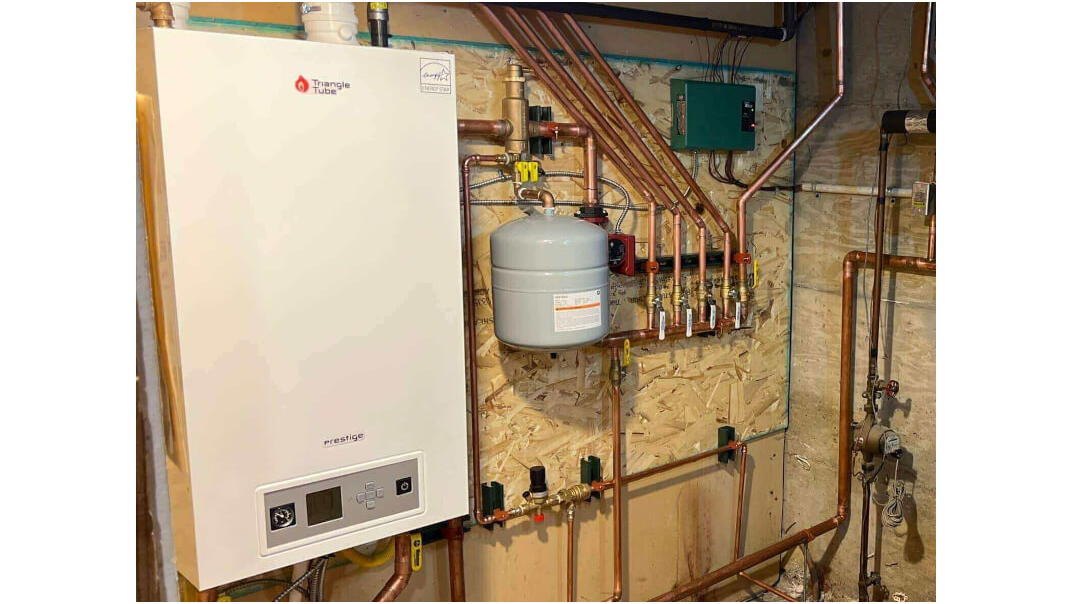
Living at altitude presents unique challenges that most homeowners never consider until their heating system starts acting up. Colorado Springs sits at over 6,000 feet above sea level, where the thinner air creates a perfect storm of problems for boiler systems designed for sea-level operation.
The invisible enemy attacking boiler efficiency in Colorado Springs is atmospheric pressure. At 6,000 feet elevation, air density drops by approximately 18% compared to sea level. This dramatic reduction means less oxygen is available for combustion, fundamentally altering how gas-fired boilers operate.
Standard boilers arrive factory-calibrated for optimal performance up to 2,000 feet. Above this threshold, the air-fuel mixture becomes increasingly rich with excess gas and insufficient oxygen. This imbalance creates incomplete combustion, reducing heat output while increasing fuel consumption. Research shows heating capacity decreases by 3-4% for every 1,000 feet of elevation, meaning Colorado Springs boilers can lose up to 24% of their rated capacity without proper adjustments.
The combustion disruption manifests in several ways homeowners often overlook. Flames burn yellow or orange instead of clean blue, indicating unburned fuel and reduced efficiency. Heat exchangers accumulate soot buildup that acts as insulation, further reducing heat transfer. Recovery times for hot water increase noticeably, and rooms take longer to reach comfortable temperatures despite the system running continuously.
Incomplete combustion at altitude produces more carbon monoxide than properly burning systems. While CO emissions are typically low, numerical simulations show an increasing trend with altitude for gas-fired boilers. The U.S. Consumer Product Safety Commission has recalled certain gas-fired boilers specifically because safety devices may fail at altitudes above 5,400 feet, creating carbon monoxide poisoning risks.
The danger compounds because altitude has an exacerbating effect on carbon monoxide uptake into human bloodstream. This means existing building standards for acceptable CO levels may not provide adequate safety margins at significant elevations. Emergency boiler repair specialists in the Colorado Springs area frequently encounter situations where improperly adjusted systems create dangerous CO levels in homes.
Homeowners in Colorado Springs often accept high heating bills as inevitable, not realizing their boiler's poor combustion efficiency is the culprit. Without proper altitude adjustments, heating systems experience reduced capacity, longer run times, and dramatically increased fuel consumption. The standard derating factor for combustion equipment is 2-3% for every 1,000 feet above sea level, but real-world efficiency losses often exceed these figures when systems remain unadjusted.
A boiler struggling with altitude-related issues might consume 15-25% more natural gas than necessary. For an average Colorado Springs home spending $800-1,200 annually on heating, this translates to $120-300 in unnecessary costs each year. Over a boiler's 15-20 year lifespan, these excess costs can reach $2,400-6,000 - far exceeding the price of proper high-altitude calibration.
The stress of operating at altitude without proper adjustments accelerates component wear throughout the entire system. Heat exchangers crack from thermal stress caused by inefficient burning patterns. Ignition systems fail more frequently when struggling with poor air-fuel mixtures. Circulation pumps work harder to compensate for reduced heat output, leading to premature bearing failure.
Residential boilers generally last 15 to 30 years with proper maintenance, but Colorado's high altitude, hard water, and extreme temperature swings can reduce lifespan to as little as 5-7 years without appropriate care. Replacing a failed boiler system typically costs $7,500-15,000 installed, making prevention through proper maintenance a critical investment.
At Colorado Springs' elevation, atmospheric oxygen concentration drops significantly below sea-level standards. This oxygen deficit forces boilers to operate with rich fuel mixtures that burn incompletely, producing longer, wider flames than designed. Numerical simulation studies show that flame length and width in gas-fired boilers increase at high altitudes, while burnout rates decrease substantially.
The altered combustion characteristics require larger furnace dimensions to prevent high-temperature flame scouring of heat exchanger surfaces. Many residential boilers installed in Colorado Springs lack adequate combustion chamber sizing for altitude operation, leading to hot spots, premature component failure, and safety concerns. NOx emissions also increase by approximately 14 mg·m⁻³ for each 1,000 meters of altitude rise at full load operation.
Boiler systems must maintain proper pressure relationships between atmospheric conditions and internal operating pressures. Colorado Springs' reduced atmospheric pressure affects both the boiler drum operation and induced draft fan performance. System pressure regulators calibrated for sea-level operation frequently malfunction, causing erratic operation and component stress.
Expansion tanks require different pressure settings to maintain proper system pressure at altitude. The lower atmospheric pressure means standard pre-charge pressures are inadequate, leading to waterlogging, poor circulation, and pressure relief valve activation. These pressure management issues create cascade failures throughout hydronic systems, affecting circulation pumps, zone valves, and heat distribution components.
Professional high-altitude service begins with detailed combustion analysis using calibrated instruments that measure oxygen levels, carbon monoxide production, and stack temperatures. Technicians adjust gas orifices to reduce fuel flow by the appropriate percentage for elevation, typically requiring 4-6% reduction at Colorado Springs' altitude.
Air shutter modifications ensure adequate combustion air intake for the reduced fuel flow. The goal is achieving optimal excess air levels (typically 5-9% oxygen in flue gas) while maintaining CO levels below 50 parts per million. This precise calibration restores clean, efficient combustion and eliminates the sooty, inefficient burning characteristic of unadjusted systems.
Elevation-specific pressure calibration addresses the unique challenges of operating heating systems in reduced atmospheric pressure environments. Gas pressure regulators receive adjustment to maintain proper manifold pressure despite altitude effects. System operating pressures require recalibration, typically running 2-3 PSI higher than sea-level specifications.
Expansion tank pre-charge pressures need altitude-specific settings to prevent system pressure problems. Circulation pump curves may require adjustment to compensate for altered system dynamics. These pressure modifications ensure reliable operation and prevent the cycling problems common in altitude-challenged systems.
High-altitude safety testing goes beyond standard procedures to address elevation-specific risks. Carbon monoxide testing becomes critical because incomplete combustion risks increase substantially at altitude. Draft testing ensures proper venting despite reduced atmospheric pressure effects on natural draft systems.
Safety device testing verifies proper operation of altitude-affected components like pressure switches and flame safeguards. Spillage testing confirms that combustion products vent properly rather than entering living spaces. These detailed safety checks are necessary because standard sea-level safety margins may be inadequate at significant elevations.
Components operating at altitude exhibit different wear patterns than sea-level installations. Heat exchangers show characteristic stress patterns from altered flame shapes and combustion dynamics. Ignition systems experience accelerated wear from struggling with poor air-fuel mixtures and may require more frequent replacement.
Circulation pumps work harder to compensate for reduced system efficiency, leading to bearing wear and seal failures. Control boards may exhibit temperature-related stress from longer operating cycles. Professional inspection identifies these altitude-specific wear patterns before they cause system failures.
Several performance indicators signal the need for high-altitude boiler service. Inconsistent heating throughout the home often indicates circulation problems caused by altitude-related pressure issues. Longer recovery times for hot water suggest reduced heating capacity from poor combustion efficiency.
Increased cycling, where the boiler turns on and off repeatedly without reaching set temperatures, frequently results from systems struggling with altitude-affected combustion. Higher than normal utility bills without increased usage indicate efficiency losses from improper air-fuel ratios. Strange noises like banging, rumbling, or whistling often signal pressure problems or incomplete combustion issues.
Certain symptoms require immediate professional attention due to safety implications. Yellow or orange flames instead of clean blue indicate incomplete combustion and potential carbon monoxide production. Any gas odors around the boiler or in living spaces warrant emergency service, as altitude can affect gas pressure regulation and leak detection.
Sooty residue around the boiler or on nearby surfaces indicates combustion problems that create both efficiency and safety concerns. Frequent headaches, dizziness, or flu-like symptoms in occupants may indicate carbon monoxide exposure from improperly burning boilers. Error codes or safety lockouts becoming frequent suggest systems struggling with altitude-related operational challenges.
Investing in professional high-altitude boiler maintenance protects both your heating system investment and your family's safety. Annual tune-ups specifically designed for Colorado Springs' elevation typically cost $150-350 but can save $300-700 annually in reduced fuel consumption. The efficiency gains from proper altitude calibration often pay for maintenance costs within the first heating season.
Beyond cost savings, proper high-altitude maintenance extends system lifespan by reducing the stress and wear caused by improper operation. Systems operating with correct combustion parameters and pressure settings typically last 5-7 years longer than those struggling with altitude-related issues. This longevity translates to thousands in avoided replacement costs.
Most importantly, professional high-altitude service ensures safe operation in Colorado Springs' challenging environment. Proper combustion analysis and safety testing prevent the carbon monoxide risks that increase at altitude. Regular inspection identifies potential problems before they become dangerous or expensive failures during harsh winter weather.
For expert high-altitude boiler maintenance and repair services specifically designed for Colorado Springs' unique challenges, Talmich Plumbing and Heating provides specialized heating system solutions with specialized knowledge of high-elevation installation requirements.