Your phone might be the reason you can’t fall asleep. This guide explains how blue light disrupts your natural sleep cycle, what screen hygiene actually means, and practical steps you can take to protect your eyes and sleep better.
You've probably done it—lying in bed at midnight, doom-scrolling through social media, telling yourself "just five more minutes." Then suddenly it's 1:30 AM and you're wide awake, watching videos about how cheese is made while your alarm sits there set for 6 AM. Good luck with that.
Here's the thing: your phone isn't just stealing your time, it's actively messing with your brain chemistry. And no, that's not dramatic—it's just biology.
Your body runs on a 24-hour internal clock called the circadian rhythm, and this clock tells you when to feel awake and when to feel sleepy. Light is the main signal that keeps this clock synchronized with the outside world.
For thousands of years, humans only had natural light to work with. Sun came up, you woke up; sun went down, your body started producing melatonin—the hormone that makes you drowsy. Simple system that worked great for a very long time.
Then we invented electric lights, computers, and smartphones, and suddenly we're blasting our eyeballs with artificial light at all hours of the day and night.
Blue light sits in the 380-550 nanometer range of the visible spectrum, which is the same wavelength that dominates natural daylight. When your eyes detect this light, they send a signal to your brain that essentially says "Hey, it's daytime! Stay alert!" and your brain responds by suppressing melatonin production.
The result is that you feel wired when you should feel tired.
Here's where it gets tricky, because you might think "I'll just dim my screen" and assume that solves everything. Dimming helps a little, but it doesn't solve the core issue since even at lower brightness, screens still emit significant amounts of blue light.
You might also think the problem is obvious—everyone knows screens are bad before bed. But most people underestimate how sensitive the human eye actually is to light exposure, and studies suggest that even two hours of screen use in the evening can delay melatonin release by several hours.
And it's not just about falling asleep, either. Blue light exposure before bed can reduce the overall quality of your sleep, meaning you might technically get seven hours but you're spending less time in the deep, restorative stages that actually leave you feeling refreshed.
The sneaky part is that you adapt to feeling tired, and after weeks of poor sleep, exhaustion becomes your normal. You forget what "well-rested" even feels like, which makes the problem invisible to you.
Screen hygiene is exactly what it sounds like—healthy habits around how and when you use your devices. Think of it like dental hygiene, but for your eyes and brain instead of your teeth.
Pick a time—ideally 60 to 90 minutes before bed—when you put screens away, and yes, that means all of them. Your phone, tablet, laptop, and that TV show you've been bingeing all need to go dark. This gives your brain time to recognize that nighttime has arrived and start producing melatonin naturally.
Is this easy? No, but it is effective.
Most devices now include night shift or night mode settings that reduce blue light emission after sunset, and these features warm up your screen's color temperature by shifting it toward amber tones.
It's better than nothing, but research shows these modes don't eliminate blue light entirely. They reduce it by maybe 30-50% depending on the device, which is helpful but not transformative.
The light in your room matters too, since bright overhead LEDs can contribute to the same melatonin suppression as screens. In the hour before bed, consider switching to dimmer, warmer light sources—some people use salt lamps or candles, while others just keep the lights low.
Not all screen time is equal, and scrolling social media or watching intense content tends to be more stimulating than, say, reading a calm article or listening to a podcast with the screen off. If you absolutely must use a device before bed, choose low-stimulation activities that won't get your mind racing.
Let's be honest—telling people to stop using screens at night is a bit like telling them to stop eating snacks. Technically good advice that's rarely followed consistently in the real world.
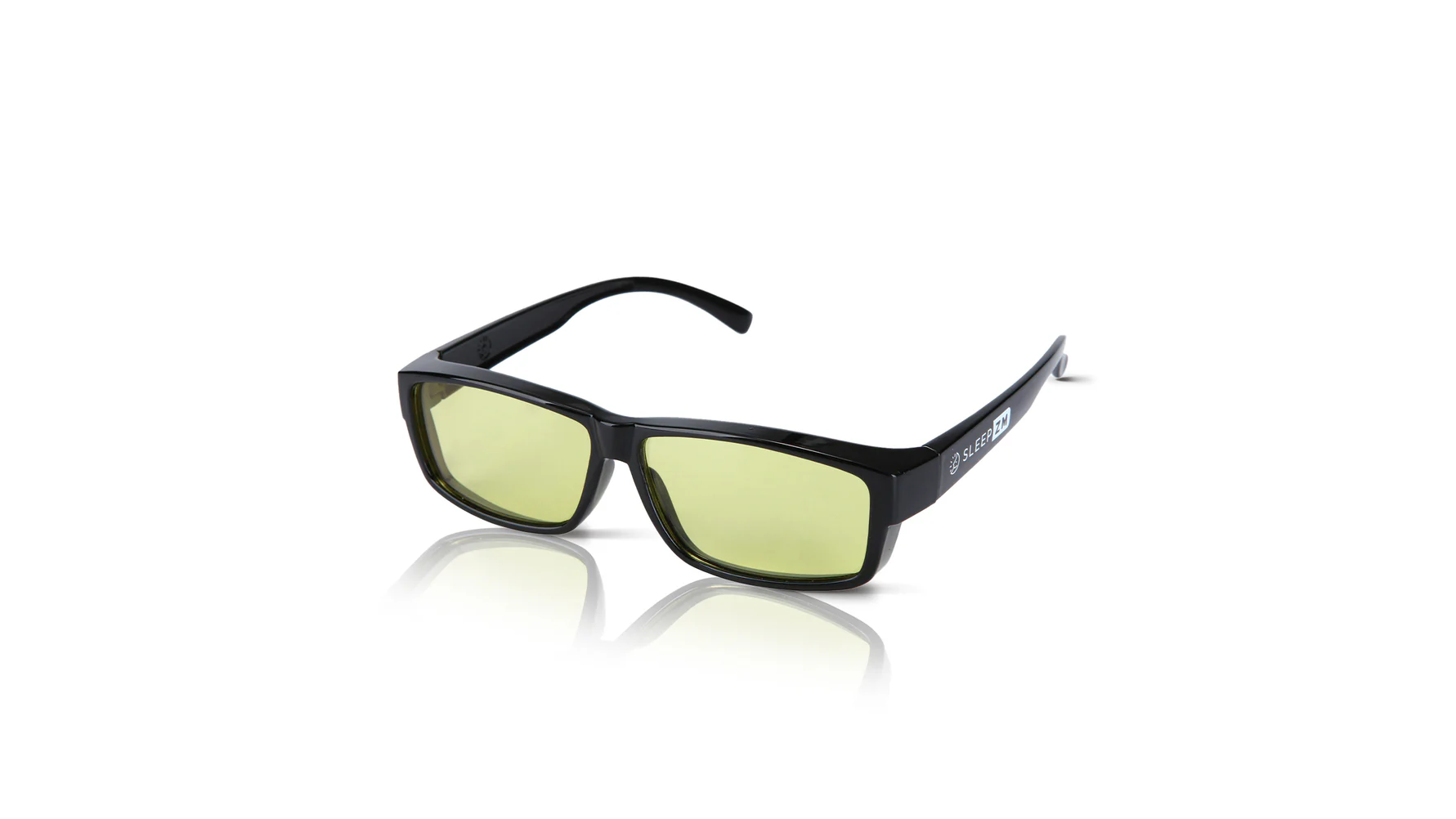
This is where blue light blocking glasses enter the picture, as they work by filtering out specific wavelengths before they reach your eyes. The idea is simple: if your eyes don't detect the problematic light, your brain won't get the "stay awake" signal.
But here's the catch—not all blue light glasses are created equal.
Daytime blue light glasses filter a moderate amount of blue light and are meant for computer work, reducing eye strain without dramatically changing how colors appear on your screen. You can wear them at the office without looking like you're about to perform laser eye surgery.
Nighttime glasses are different, as they typically use amber or orange-tinted lenses that block a much higher percentage of blue light—up to 99% in some cases. These are the ones you'd wear in the evening when you want to tell your brain that the sun has officially set.
Quality matters here because cheap glasses might tint your vision orange without actually blocking the right wavelengths. Look for glasses that specifically target the 380-550nm range, and UV protection is a bonus if you're also wearing them outdoors.
Frame comfort matters too, especially if you're wearing them for several hours at a time. Lightweight materials like TR90 tend to hold up well without causing pressure on your nose or ears, which makes a real difference during extended use.
You don't need to overhaul your entire lifestyle to see improvements. Start with one or two changes—maybe you set your phone to charge in another room after 10 PM, or maybe you try wearing blue light glasses during your evening Netflix session.
Track how you feel after a week, and most people notice they fall asleep faster and wake up feeling more alert. Some notice reduced eye strain during the day too, which is a nice bonus.
Sleep is one of those things that affects everything else—your mood, your focus, your health—and protecting it doesn't require perfection. It just requires a little awareness and a few smart adjustments to your routine.
Yes, and research shows that blue light exposure in the evening can delay melatonin production by several hours. Even moderate screen use before bed can reduce sleep quality and make it harder to fall asleep, though the effect varies by individual. Most people notice improvements when they reduce nighttime screen exposure.
Night mode helps, but it doesn't block all blue light since these settings typically reduce blue light emission by 30-50%, which lessens the impact but doesn't eliminate it. For stronger protection, especially in the hours before bed, dedicated blue light blocking glasses offer more complete filtration.
Daytime blue light glasses with clear or lightly tinted lenses are safe for extended wear, as they reduce eye strain without blocking the natural light exposure you need during the day. Amber-tinted nighttime glasses should be reserved for evening use, as wearing them during the day can interfere with your natural circadian rhythm.
Look for brands that specialize in blue light filtration glasses rather than general eyewear retailers and that offers a range of options including daytime, nighttime, clip-on, and fit-over styles, with lenses tested to block up to 99.9% of harmful blue light wavelengths.


