If you’re a beginner music producer overwhelmed by synthesizer options, Moog’s legendary analog sound might seem appealing – but not all their models suit newcomers equally well. Here’s which Moog synthesizers actually help beginners learn synthesis fundamentals.
Choosing the right synthesizer as a beginner music producer can feel overwhelming - with countless options flooding the market. However, when you find out which instruments genuinely support learning while delivering professional results, it'll narrow the field significantly. Moog's reputation for quality analog synthesis makes its offerings particularly attractive, but not all Moog synthesizers suit newcomers equally well, experts say.
Since the 1960s, Moog synthesizers have shaped electronic music - establishing the sonic foundation for everything from progressive rock to modern techno. The company's commitment to analog circuitry creates instruments that respond musically to player input, making them ideal teaching tools for understanding synthesis concepts. Unlike digital alternatives that can sound sterile, Moog's analog designs are known for producing a warm and characteristic sound.
The legendary Moog ladder filter is still one of the most musical-sounding filters ever created, capable of subtle tone shaping or dramatic resonant sweeps. This filter appears across Moog's product line, ensuring consistent sonic character whether choosing an entry-level model or professional instrument. The hands-on control philosophy encourages experimentation over menu-diving, helping beginners develop an intuitive understanding of synthesis through tactile interaction.
Moog's semi-modular approach allows gradual expansion into more complex territory. Beginners can start with complete instruments that work immediately, then explore modular synthesis concepts through patch points and CV connections. This scalability means the instrument grows with the user's knowledge and ambitions, preventing the common problem of outgrowing beginner gear too quickly.
The DFAM and Mother 32 bring to the table two distinct approaches to electronic music creation, each serving different musical needs despite sharing similar price points. Understanding their unique strengths will help you choose the right foundation for your musical journey.
The DFAM (Drummer From Another Mother) breaks traditional drum machine conventions by creating percussive sounds through analog synthesis instead of sample playback. Two wide-range oscillators combine with a white noise generator and three dedicated analog envelopes to craft everything from thunderous kicks to metallic hi-hats. The classic Moog filter shapes these elements with switchable low-pass and high-pass modes, allowing both punchy impacts and cutting metallic textures.
However, the 8-step sequencer can present significant limitations for beginners exploring complex rhythmic patterns. While there are many compelling beats within 8-beat frameworks, newcomers often struggle with this constraint when learning basic rhythm programming. Each step offers individual pitch and velocity control, but the short sequence length can feel restrictive compared to modern drum machines offering 16, 32, or even 64-step patterns.
The DFAM excels at creating organic, breathing percussion that evolves with each performance. The 24-point patchbay opens extensive modulation possibilities, but beginners might find the patch cable workflow intimidating initially. This instrument rewards patience and experimentation, making it better suited for producers ready to invest time in understanding unconventional percussion synthesis.
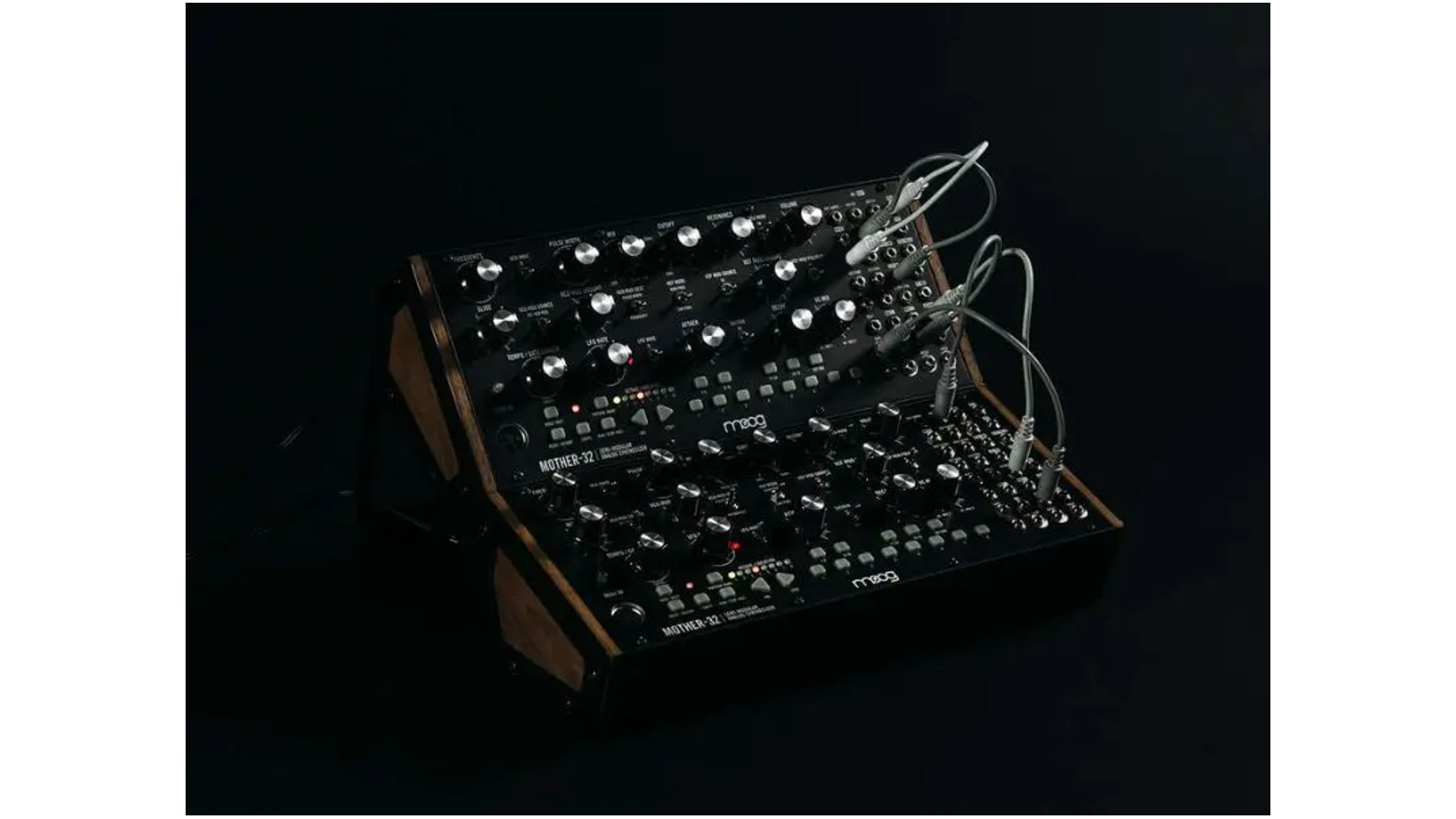
The Mother 32 delivers classic Moog synthesis in a beginner-friendly package, housing the same oscillator and filter circuitry that made vintage Moogs legendary. The single oscillator produces pulse and sawtooth waves with unmistakable analog warmth, while the Moog ladder filter provides everything from subtle tone coloring to screaming resonant sweeps that cut through dense mixes.
The 32-step sequencer with 64 sequence locations turns simple note patterns into evolving musical phrases. Unlike basic step sequencers, this system supports real-time manipulation through voltage control, allowing sequences to speed up during build-ups or slow down for breakdowns. The MIDI input and CV converter bridge computer-based production with analog synthesis, so integration with existing setups is seamless.
For beginners, the Mother 32 provides more immediate musical gratification than the DFAM. Complete bass lines, lead melodies, and harmonic content emerge quickly, offering traditional synthesizer functionality that translates well from software experience. The 32 modular patch points also introduce modular concepts gradually without overwhelming newcomers with complexity.
While the DFAM and Mother 32 receive significant attention, other Moog synthesizers might better serve beginner needs depending on musical goals and learning preferences.
The Moog Grandmother stands out as an ideal beginner synthesizer for those serious about understanding synthesis fundamentals. The transparent signal flow layout makes every connection visible, turning abstract synthesis concepts into clear visual relationships. Two oscillators, a noise generator, extensive modulation options, and the classic Moog filter create a complete learning laboratory.
The built-in spring reverb adds instant atmosphere to any sound, while the arpeggiator and simple sequencer provide rhythmic possibilities without overwhelming complexity. Most importantly, the Grandmother sounds incredible in every setting, encouraging experimentation without fear of creating unusable sounds. The clear panel layout eliminates menu-diving entirely, keeping focus on sonic exploration rather than navigation.
Expert opinions consistently recommend the Grandmother for beginners wanting both a playable instrument and educational tool. The full-sized keyboard enables traditional playing techniques, while extensive patch points allow for gradual exploration of modular concepts. This combination makes it suitable for everything from basic melody playing to advanced sound design exploration.
The Moog Mavis offers authentic analog synthesis at a price point accessible to most beginners. This semi-modular design features a wave folder for harmonic manipulation, extensive modulation routing, and the signature Moog filter character. Card overlays provide patch guidance, helping newcomers understand signal flow and modulation concepts without requiring extensive synthesis knowledge.
The compact desktop format saves space while delivering full synthesizer functionality. Unlike the Mother 32's single oscillator, the Mavis includes multiple sound sources and modulation options that encourage creative exploration. The educational approach through visual guides makes complex concepts approachable even for total beginners.
What's more, at under $300, the Mavis represents exceptional value for authentic Moog synthesis. The semi-modular architecture teaches modular concepts without requiring expensive expansion modules, so it's an ideal stepping stone toward more complex systems. The DIY assembly option further reduces costs for technically inclined beginners while providing deeper understanding of synthesizer construction.
Selecting the right first synthesizer depends on your musical goals, budget constraints, and learning preferences. Each option serves different needs while offering distinct advantages for beginning producers.
The DFAM makes sense for producers focused primarily on rhythmic creation and percussive experimentation. Beginners drawn to industrial, techno, or experimental electronic music will appreciate the DFAM's ability to create organic-sounding percussion from scratch. The instrument excels when integrated into setups already containing melodic elements, filling the rhythm section with unique analog percussion.
Choose the DFAM if drum programming fascinates you more than melody creation. The hands-on approach to rhythm synthesis teaches percussion concepts unavailable in sample-based drum machines. However, beginners should understand that the DFAM represents a specialized tool rather than a complete music creation system, requiring additional instruments for full song composition.
The Mother 32 suits beginners wanting traditional synthesizer functionality with modern convenience. The MIDI integration allows seamless connection with computer-based production software, making the transition from digital to analog synthesis smooth. The extensive sequencing capabilities support complete song creation, from bass lines to lead melodies.
Beginners interested in classic analog synthesis sounds should prioritize the Mother 32. The single oscillator design teaches fundamental synthesis concepts without overwhelming complexity, while the modular connectivity allows gradual expansion. This instrument provides the most versatile foundation for producers planning to build their analog setups over time.
Several non-Moog options also deliver excellent results for budget-conscious beginners. The Korg Minilogue XD combines analog warmth with digital versatility, offering four-note polyphony for chords and layering. The Arturia MicroFreak provides extensive sound design capabilities with built-in sequencing and modulation matrix at an affordable price point.
The Yamaha Reface CS offers compact analog modeling with hands-on controls, ideal for small spaces and travel. The Roland GO:KEYS 5 delivers modern flexibility with user-friendly interfaces and Roland's sound engine. These alternatives provide different approaches to synthesis learning while maintaining professional sound quality suitable for serious music production.
The Korg Volca series offers specialized synthesizers for specific purposes, such as the Volca Keys for polyphonic synthesis or Volca Bass for basslines. These compact instruments cost significantly less than Moog options while teaching synthesis fundamentals effectively. The dedicated knob-per-function approach makes learning synthesis concepts intuitive and immediate.
The best first synthesizer balances educational value with musical inspiration, providing clear learning paths while delivering sounds that motivate continued exploration. Moog synthesizers excel in both areas, offering legendary sound quality with interfaces designed for hands-on learning. Whether choosing the rhythm-focused DFAM, melodic Mother 32, educational Grandmother, or affordable Mavis, each instrument provides an authentic analog synthesis experience that digital alternatives struggle to match.
Success in synthesis learning comes from consistent hands-on experience rather than extensive feature lists. Choose the instrument that inspires regular playing and experimentation, knowing that synthesis skills transfer between different instruments as musical understanding develops. Your journey into electronic music production begins with that first inspiring sound, and Moog synthesizers consistently deliver those magical moments that begin with curiosity and blossom into passion.
Discover the perfect synthesizer for your music production journey and explore Sam Ash's complete selection of professional instruments.


