Flying with oxygen therapy doesn’t have to ground your travel plans, but airlines have strict battery requirements that catch many passengers off guard. The Inogen Rove 6 changes the game, though proper preparation involves more than just packing extra batteries.
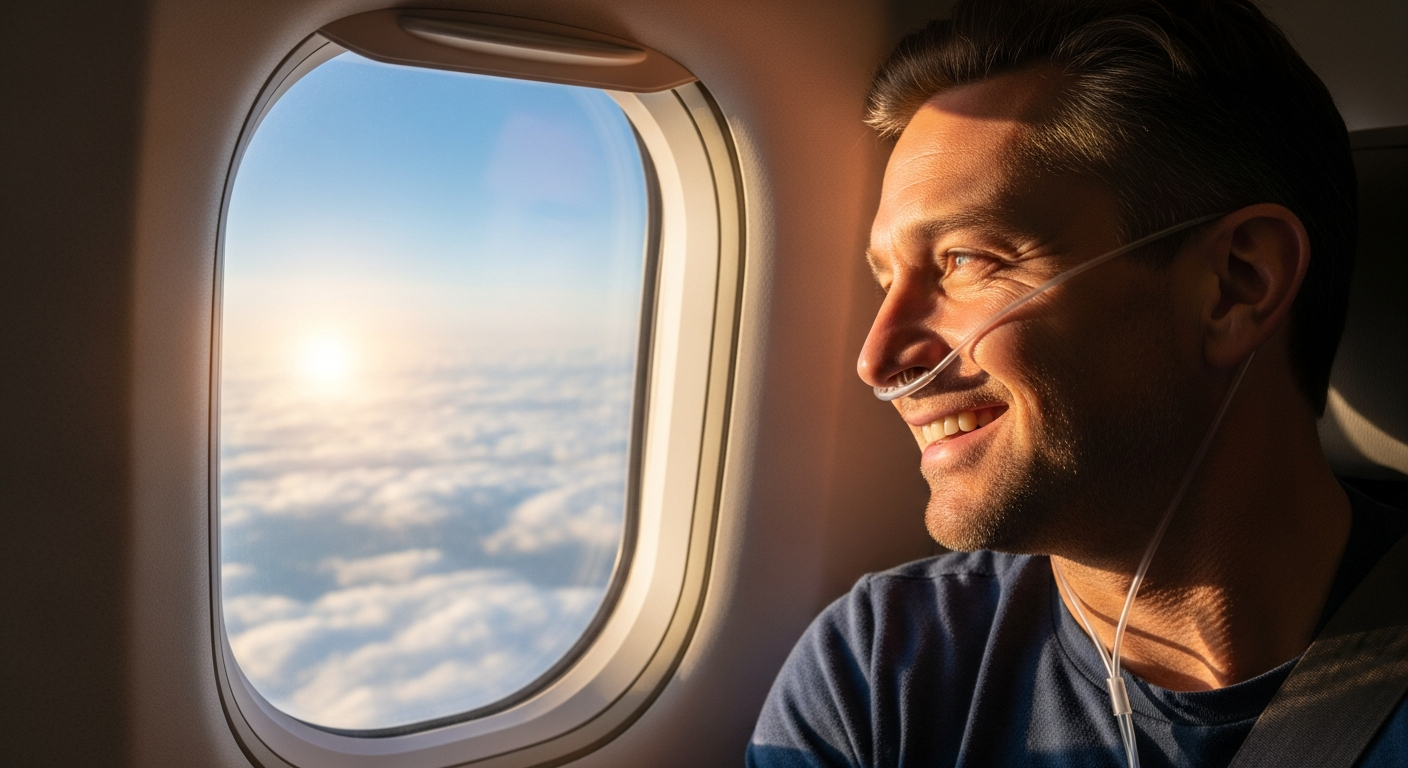
With proper planning, portable oxygen concentrator (POC) users can fly confidently and independently—opening the door to family visits, business trips, and dream vacations.
Experts from Main Clinic Supply recommend Inogen Rove 6, which is fully FAA-approved for on-board use and weighs under 5 pounds with its standard battery—making it one of the lightest concentrators in its class. While most airlines ban pressurized oxygen cylinders, portable oxygen concentrators (POCs) are permitted once approved for in-flight use. Always confirm directly with your airline before departure.
Powered by Inogen's Intelligent Delivery Technology (IDT), the Rove 6 automatically adjusts oxygen delivery to match your natural breathing rate. This ensures optimal oxygen flow whether you're resting, walking to the gate, or moving about the cabin. With six pulse-dose settings, users can easily tailor therapy to altitude or activity level changes during flight.
The Rove 6's compact design fits comfortably under seats or on laps, resembling a small handbag or camera case. Its lightweight frame and portable batteries make it an ideal travel companion for maintaining independence and health at 35,000 feet.
Successful travel begins weeks before takeoff. Three essential steps build a smooth and compliant flight experience.
All airlines require a physician's statement confirming your medical need for in-flight oxygen. The documentation must list:
Many airlines provide their own medical forms. Carry several copies of your prescription and physician letter in both your carry-on and personal items—TSA and flight crews may request to review them at multiple points.
Notify your airline at least 48 hours before departure—some carriers require up to 72 hours. Confirm:
Early communication ensures extra boarding time, smooth check-ins, and gate support for medical devices.
Airlines mandate 150% of total flight time in battery capacity. For instance, a six-hour flight requires nine hours of available power. Some international flights use the alternative "flight time plus three hours" rule, so verify policies when booking.
The Rove 6 standard battery lasts up to 6 hours and 15 minutes at setting 1; the extended battery lasts up to 12 hours and 45 minutes at setting 1.
Higher oxygen settings significantly reduce runtime—setting 6 drops to ≈ 1.5 hours—so plan battery inventory based on your prescribed flow rate, not just manufacturer maximums.
Understanding and respecting airline battery rules can allow for continuous therapy and flight safety.
Airline Battery Regulations
Standard vs Extended Battery Options
Choose the extended option for long or multi-leg flights to ensure uninterrupted coverage.
The TSA treats portable oxygen concentrators as medical devices. Know what to expect at checkpoints.
Arrive 2-3 hours before domestic flights (longer for international). Request wheelchair or special-assistance service if carrying multiple batteries or heavy luggage—this typically provides faster TSA access.
At the gate, locate power outlets to top off charging. Bring a short extension cord in case outlets are limited. Introduce yourself to the gate staff for early boarding and seating coordination.
The Rove 6 complies with all in-flight POC storage rules:
Cabin pressure ≈ 8,000 ft — you may need to increase your setting slightly compared to ground use. Use a pulse oximeter to monitor SpO₂ and adjust only under medical guidance, and be mindful: higher settings shorten battery runtime significantly.
Flying with the Inogen Rove 6 is straightforward when patients prepare properly: secure physician documents, coordinate with airlines, plan extra batteries, and understand security rules.
This combination of portability, advanced delivery technology, and FAA approval makes the Rove 6 an empowering POC for travelers who refuse to let oxygen therapy limit their adventures.
This article is for educational purposes only and does not constitute medical advice. Portable oxygen concentrators require a valid prescription and should be used under the supervision of a licensed healthcare professional.
The FAA approval of the Inogen Rove 6 confirms it meets aircraft use standards; however, each airline maintains its own medical device requirements. Always verify documentation, battery limits, and boarding procedures with your carrier in advance.


