Choosing the right suit fabric, color, and fit is essential for grooms and groomsmen dressing for summer weddings across beach, garden, and destination venues.
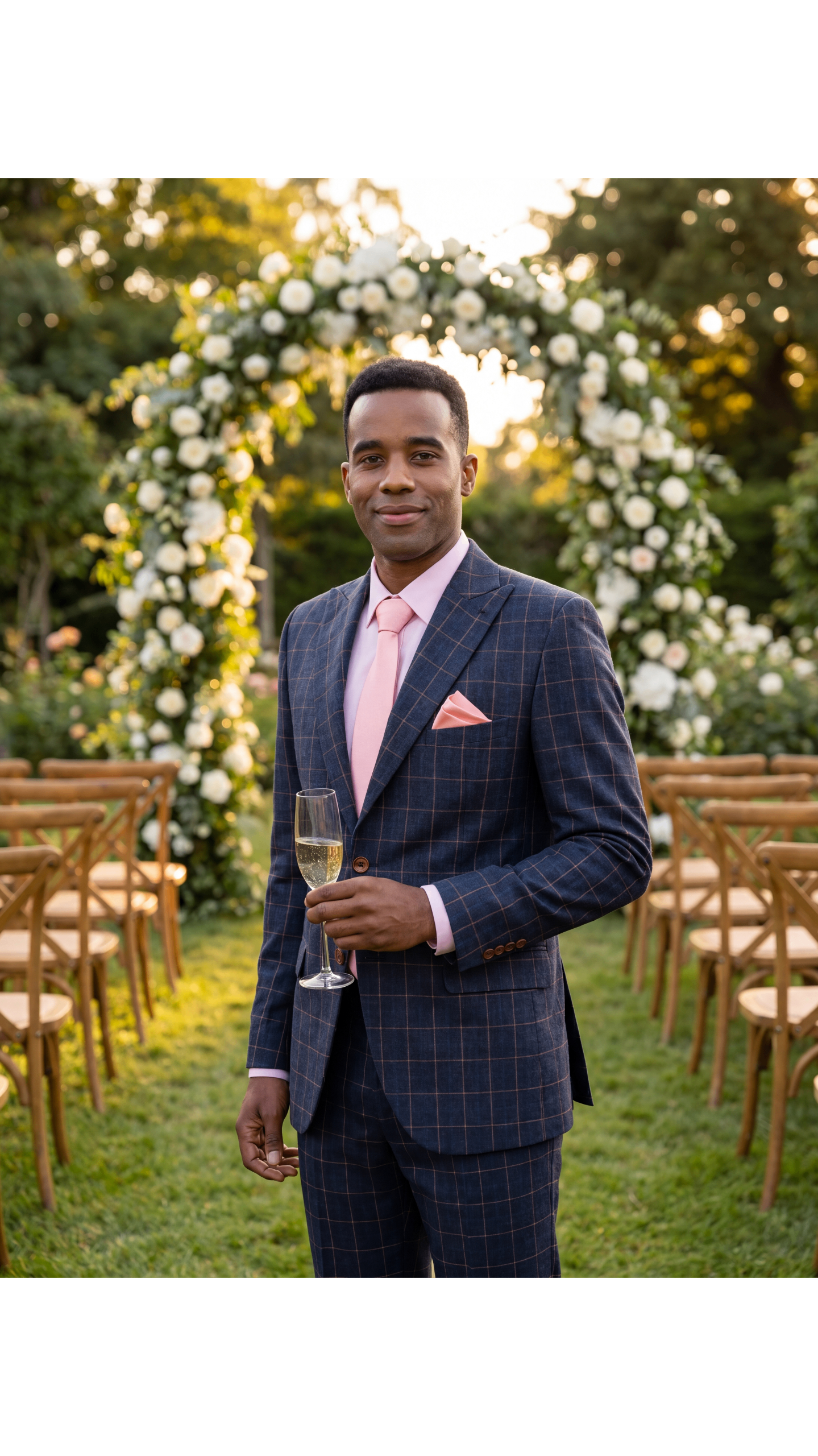
Summer weddings come with a specific set of challenges that cooler-season ceremonies simply don't. Heat, humidity, outdoor venues, and long event days all place demands on what a groom and his wedding party wear. Choosing the right suit is less about trend-chasing and more about understanding which fabrics, fits, and colors hold up when the temperature rises, and when the photographs matter most.
Fabric is the single most important decision for a summer wedding suit. The wrong material can mean discomfort by the ceremony's end; the right one keeps you composed from the first handshake to the last dance.
Linen is the most popular choice for warm-weather weddings, and for good reason. It is a naturally breathable, moisture-wicking fiber that regulates body temperature better than most suiting fabrics. Pure linen has a distinctive texture and drape that photographs well in natural light, making it particularly suited to outdoor settings like beaches, gardens, and open-air venues. Its one known limitation is that it wrinkles with wear, a characteristic many consider part of its relaxed, elegant character, though grooms who prefer a crisper look through a long event day may want to consider a linen-cotton blend, which offers the same breathability with reduced creasing.
Cotton is another viable option. Lighter than wool and more structured than linen, a well-cut cotton suit works across semi-formal and formal summer weddings alike. It holds its shape better than linen and suits a wider range of dress codes.
Tropical wool, a lightweight, open-weave wool, is worth considering for grooms who want the formality of a traditional suit without the weight. It breathes better than standard wool and maintains a clean, tailored silhouette throughout the day.
Fabrics to approach with caution in summer include heavy wool, velvet, and thick tweed. These trap heat and are better suited to autumn and winter ceremonies.
Summer weddings open up the color palette considerably compared to formal winter affairs. While navy and charcoal remain safe and versatile options, warm-weather venues invite a broader range of choices.
Neutral tones, such as sand, stone, ivory, and light grey, are consistently popular for summer and destination weddings. They complement natural surroundings, photograph cleanly in bright light, and pair easily with a range of shirt and tie combinations.
Earthy and muted tones such as olive, sage, and warm beige have gained significant traction in recent years, particularly for garden and countryside weddings where the palette is drawn from the landscape.
Bolder colors, such as deep teal, jade green, dusty blue, and terracotta, work well for grooms and groomsmen who want a more distinctive look. These shades tend to stand out in outdoor photography without appearing jarring, provided the rest of the outfit is kept relatively simple.
White suits, while striking, require careful consideration. They work best in beach or resort settings and demand a high level of confidence in the venue's conditions.
Regardless of fabric or color, fit remains the defining factor in how a suit looks and feels. A well-fitted suit in a modest fabric will always outperform an expensive suit that doesn't sit correctly on the body.
For summer weddings, a slightly slimmer silhouette tends to read better in photographs and in outdoor settings. Experts from Sartoro advise avoiding excess fabric through the chest, waist, and trouser leg, as it reads as heavier and less intentional. Sleeve and trouser length should be checked carefully, as these are the details that separate a polished look from an approximate one.
Summer wedding suits should be ordered with sufficient lead time, particularly for made-to-measure or custom options, which typically require two to four weeks for production and delivery. Grooms coordinating suits for a wedding party should account for additional time to align measurements, styles, and any alterations.
The right summer suit is ultimately a balance of comfort, context, and personal style. Getting the fabric right is the foundation: everything else follows from there.


