From fine dust to heavy liquid waste, industrial cleanup requires more than just power—it demands precision, safety, and smart design. Here’s what experts say about choosing the right heavy-duty vacuum cleaner for serious wet and dry surface challenges.
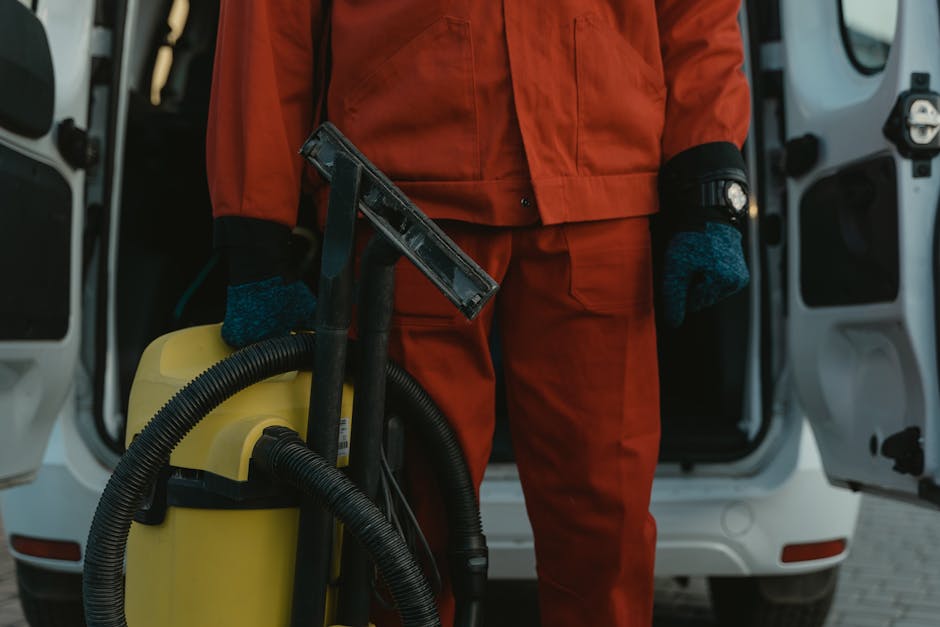
Whether it's drywall dust clogging filters or slurry pooling on a warehouse floor, most vacuums just aren't built to keep up. Heavy-duty cleaning often means dragging oversized machines, tripping over cords, or settling for weak suction that leaves behind more than it picks up.
And the market agrees: in 2025, the U.S. industrial vacuum cleaner market is expected to hit $665.5 million, with global revenue projected to surpass $1.14 billion by 2033, according to Future Market Insights and Research and Markets.
What's driving this growth? According to experts at —a distributor of professional-grade tools and equipment—it is the increased demand across sectors such as construction, food processing, manufacturing, and healthcare, where efficiency and safety are non-negotiable.
High CFM suction is only the beginning. Today's industrial buyers are looking for:
In fact, HEPA-equipped vacuums now dominate 35% of the market, and over 50% of new wet/dry models are HEPA-ready (Astute Analytica).
Twin motors, auto filter cleaning, and a 25-gallon stainless steel tank built for large-scale messes. Ideal for wet/dry environments in construction and manufacturing.
Compliant with OSHA silica dust regulations. With 39-gallon capacity and jet filter cleaning, it's built for slurry, sludge, and wet debris.
Three bypass motors, 26-gallon tank, and a full liquid shut-off system. An antistatic option makes it even safer in workshop settings.
Cordless, bagless, lightweight, and HEPA-equipped. Ideal for drywall dust, wood shavings, and tight worksites where portability matters.
Compact yet powerful, with high-grade HEPA/ULPA filtration. Designed for industrial hygiene and dry fine dust capture.
Massive 300 CFM suction, 17-gallon tank, and anti-static hoses. Optimized for fine dust (including silica).
Corded vacuums are slowly losing ground to their cordless counterparts, especially in construction. Professionals want mobility, longer battery life, and smart features that reduce downtime.
A representative from Genuine Tools explained: "A cordless vacuum like the Milwaukee M18 fits right into the workflow of contractors already using M18 tools. It's compact, powerful, and built to handle jobsite realities without the bulk."
The M18 vacuum, for example, runs up to 43 minutes on a High Demand 9.0 battery and includes a clear 36-ounce canister, HEPA filter, and multiple attachments—supporting both portability and compliance.
Choosing the right vacuum starts with knowing your environment—and ends with finding equipment you can actually trust. For contractors and industrial teams comparing wet/dry vacs this season, distributors like can offer expert insight on models that match your jobsite needs.


