Classic Roland TB-303 sounds once cost thousands, but the budget market has shifted. Behringer’s TD-3 line makes that iconic, squelchy analog voice accessible—but is a “modded” clone the right move for your specific studio workflow?
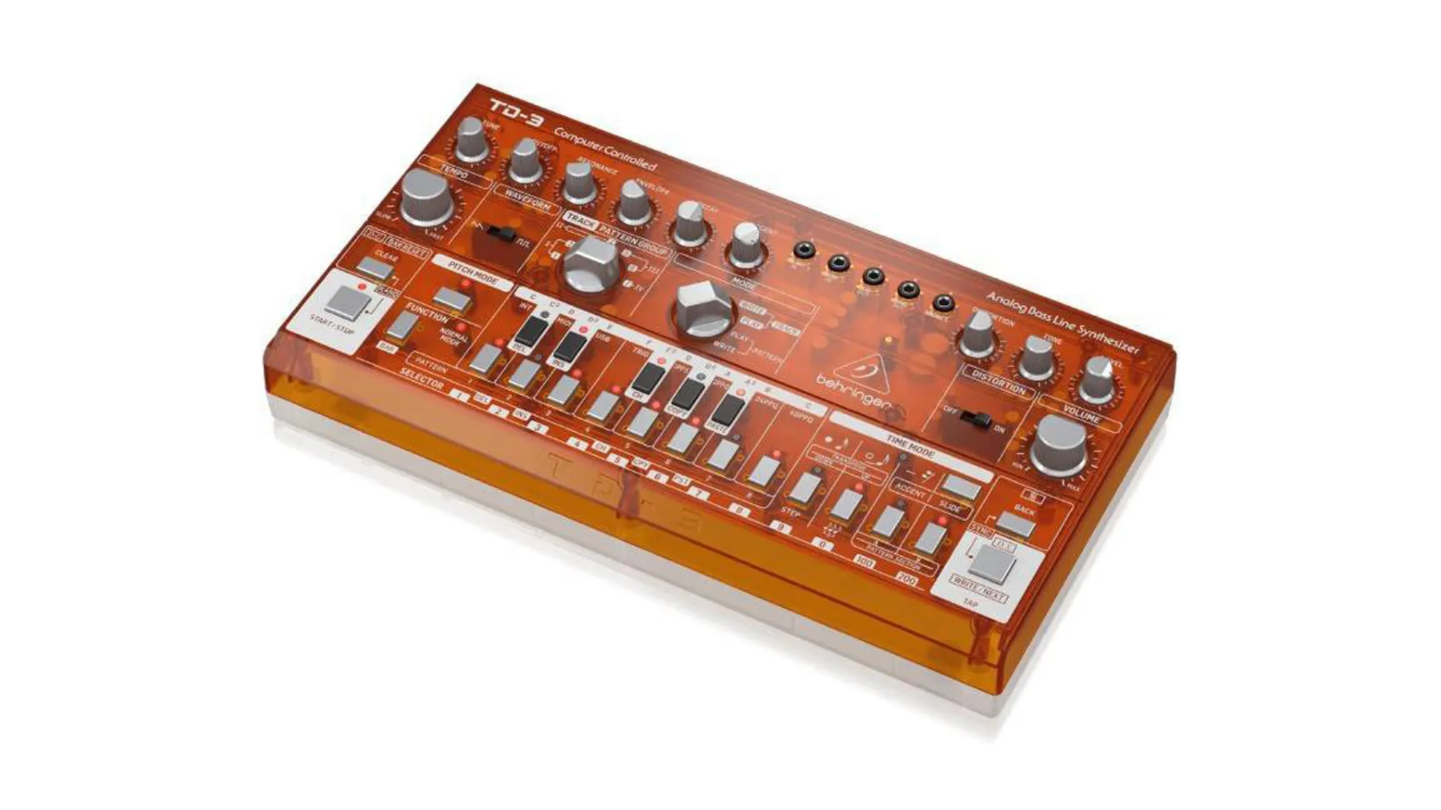
The legendary squelchy bass sounds that defined acid house and electronic music for decades no longer require expensive vintage gear or a studio built like a spaceship. Today’s compact analog boxes aim straight at that sweet spot: enough character to feel alive, enough connectivity to play nicely with a laptop, and enough affordability to be more “why not?” than “life decision.”
If you want the short version, here it is: the modern market is less about a perfect reenactment and more about getting the behavior right—snappy envelopes, filter bite, accent-driven dynamics—without turning your workflow into a restoration project. The longer version is where things get interesting.
The Roland TB-303’s bassline sound shaped entire genres of electronic music, but original units now command premium prices on the vintage market. Clone makers (and clone-adjacent makers) have responded by building instruments that aim for the same core experience—mono basslines with a resonant low-pass filter and performance controls that invite you to touch the sound while it’s moving.
One widely discussed example is Behringer’s TD-3, a compact desktop unit that’s explicitly framed as a tribute to the TB-303 sound and workflow. If you want a source that lays out the positioning, key features, and who it’s for, this Spotlight guide is a useful starting point.
What makes this tier compelling isn’t that it’s “as good as vintage.” It’s that it’s usable—and repeatable. An all-analog signal path can still be the heart of the instrument, while MIDI, USB control, and modern sync options make it a piece of a setup rather than the setup.
And yes: the sound. The reason anyone cares about a 303-style box in 2026 is the way it does motion—filter sweeps that feel like they’re biting back, resonance that becomes a melodic element, accents that turn a loop into a performance.
The TD-3 family is often treated like a single idea with a few paint jobs, but “MO” variants are typically marketed as a more feature-forward take on the same concept. The practical question for a budget studio isn’t whether it’s “better,” but whether the extras serve your actual workflow—or add switches you’ll never flip.
In expert discussions around the TD-3, the emphasis is on a classic-style architecture—VCO/VCF/VCA building blocks, a resonant low-pass filter, and hands-on controls like cutoff, resonance, envelope, decay, and accent. That’s the stuff that matters when you’re writing basslines that need to evolve without changing notes.
If you’re considering an MO-style model, keep your expectations grounded. The 303 formula is already narrow by design; the best modifications don’t replace that focus, they let you bend it. The goal is still the same: a line that can sit in a mix like a physical object.
Pattern storage (up to 250 user patterns across seven tracks) and an arpeggiator are key highlig, along with an integrated distortion circuit described as being modeled after classic pedals. Whether you treat distortion as a “character” control or a final-stage blender, having it onboard changes how quickly you can land on a usable take.
If you’re shopping in this lane, it helps to admit a truth up front: “303-style” is a sound, but “bass synth” is a job. Some boxes want to be a specific voice. Others want to be your one bass workhorse.
Novation Bass Station II — Versatility Over Purism
This is the pick for people who want one analog-ish instrument to cover more ground than acid. It can do bite and squelch, sure, but its real advantage is range: different filter behaviors, a deeper modulation feel, and a workflow that’s less “clone” and more “instrument.”
Dreadbox Typhon — Compact, Characterful, and Not Trying to Be a 303
Typhon’s appeal is its size-to-attitude ratio. It’s a desktop unit that can sound big, and it rewards experimentation. If your goal is bass that feels alive rather than historically accurate, it’s a good reminder that clones aren’t the only way to get analog-style impact.
Arturia MicroBrute — A Learning Machine That Happens to Hit Hard
MicroBrute has that “first synth” clarity: what you see is what you hear. The semi-modular patch points are less about building a modular rig and more about teaching you signal flow by making it tactile. It can do bass. It can also teach you why bass works.
Moog Minitaur — The Straight-Line Moog Answer
Minitaur isn’t an acid box. It’s a bass specialist with a different accent—rounder, thicker, more “foundation” than “squelch.” If you want bass that feels like it’s holding the track up, it’s hard to argue with the classic Moog filter/oscillator approach.
A second 303-style unit — The “Two Lines, One Groove” Move
If you’re committed to the 303 workflow, sometimes the smartest “upgrade” is doubling down: two complementary patterns, slightly different tones, and a groove that sounds wider without needing layers of plugins.
Integrating an analog bass box into a home studio is less complicated than it used to be, but it still benefits from a little discipline. The two big pieces: control and audio.
MIDI and USB Integration Made Simple
USB MIDI and standard MIDI ports are the modern safety net. Use one lane for note/clock control, and keep your audio path clean. If you’re recording, commit to a level that doesn’t clip, and remember that the “best” tone often comes from performance moves—cutoff rides, resonance nudges, distortion sweeps—rather than from endlessly re-amping a static loop.
Poly Chain Capability for Expanded Sounds
It’s tempting to treat linking multiple units as a default “upgrade path,” but for most home studios, the real expansion comes from arrangement: layering, call-and-response patterns, and intentional automation. Before you plan a wall of synchronized boxes, make sure you’re actually getting what you want out of one.
Affordable analog bass synths are no longer novelty purchases. They’re practical tools that can anchor a track, teach you synthesis, and pull you away from the screen in the best way: by forcing decisions.
The right pick depends on what you want to write. If you want acid-style basslines with a dedicated workflow, a 303-style unit makes sense. If you want one box that can do bass and other duties, a more versatile mono synth might be the smarter spend. Either way, the point isn’t to own a legend—it’s to capture the part of the legend that still matters: motion, grit, and a line that insists on being heard. Learn how from the experts. Your audience will thank you for it.


