A winter blanket can mean the difference between comfort and crisis in regions like northern Bangladesh, where low temperatures create serious health and survival challenges for vulnerable households.
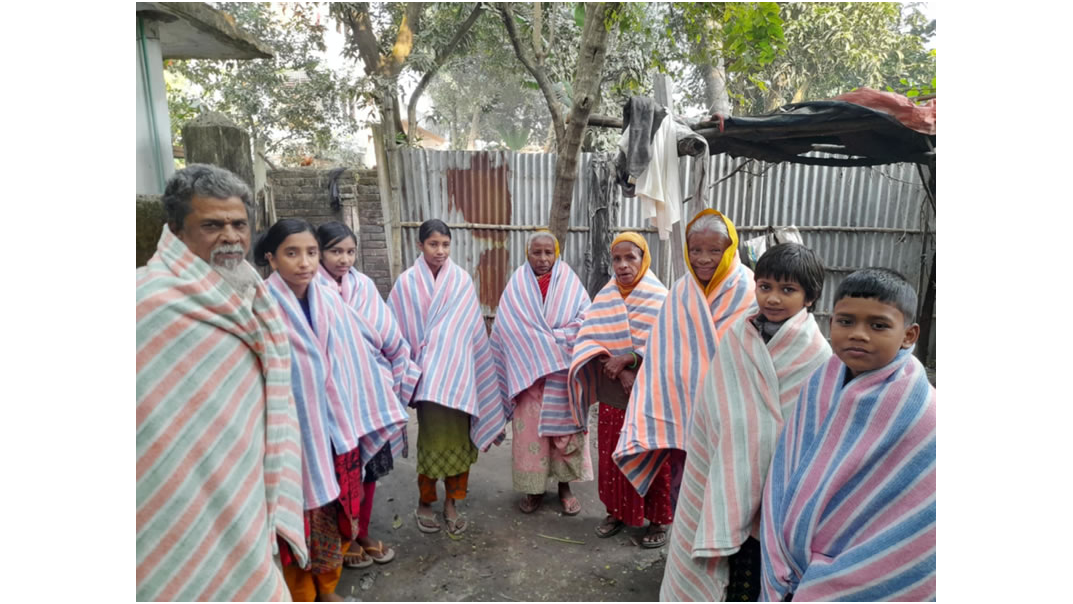
When winter arrives in northern Bangladesh, temperatures can fall below 5°C according to the Bangladesh Meteorological Department—cold enough to trigger dangerous health risks in communities without insulated housing or reliable heating. In regions where daily life is shaped by humidity and monsoon seasons, the sudden shift into near-freezing conditions can be both unexpected and life-threatening.
Cold exposure is an underrecognized threat in Bangladesh, particularly in rural districts where many families lack the layers, materials, and indoor warmth often taken for granted elsewhere. Research from icddr,b shows that respiratory infections and cold-related complications rise sharply during the winter months, with children and the elderly facing the greatest vulnerability.
In households already stretched by limited income, the cost of warm bedding is often unattainable. A single blanket may need to serve several family members, leaving others exposed overnight when temperatures are at their lowest. For communities recovering from seasonal flooding, crop loss, or economic disruption, winter arrives before recovery is complete—compounding the strain on the young and the old alike.
Not all blankets offer the same level of protection, and understanding the materials can help highlight why this simple item is so essential.
While clothing and makeshift bedding offer some relief, a properly insulated blanket is often the most practical and immediate defense against sustained cold.
In many northern communities, donated blankets serve as the primary barrier between families and the coldest nights of the year. Organizations engaged in food relief and community outreach have observed that households receiving winter supplies show reduced rates of cold-related illness, especially among young children.
Lotus Ministry Trust, which incorporated blanket distribution into their wider food relief efforts after recognizing increasing demand during past winters, says that people often don't realize the difference a simple blanket can make. Field teams visiting remote villages have reported that many households rely exclusively on community-supported blankets to withstand the season, particularly those recovering from recent floods or harvest losses. It is no surprise, then, that charities working on the ground in Bangladesh have highlighted a growing need for both warmth and nutrition as winter conditions continue to challenge low-income regions.
Community members receiving winter support often describe the reassurance that comes with having even one dependable blanket during cold nights. For many families, this small layer of warmth represents safety, health protection, and dignity during a season that grows more unpredictable each year.
As winter progresses and temperatures drop further, organizations involved in relief distribution continue to emphasize the critical role of warm blankets in safeguarding vulnerable populations. Those wishing to understand more about ongoing winter support efforts in Bangladesh can explore the work being done throughout affected regions and the continued need for warm, protective supplies.


