You’ve probably experienced the frustration of automated phone systems that can’t handle real problems—but what if AI could recognize when you need a human and seamlessly hand you off mid-conversation without repeating yourself? The technology exists, and it’s changing how businesses think about customer service.
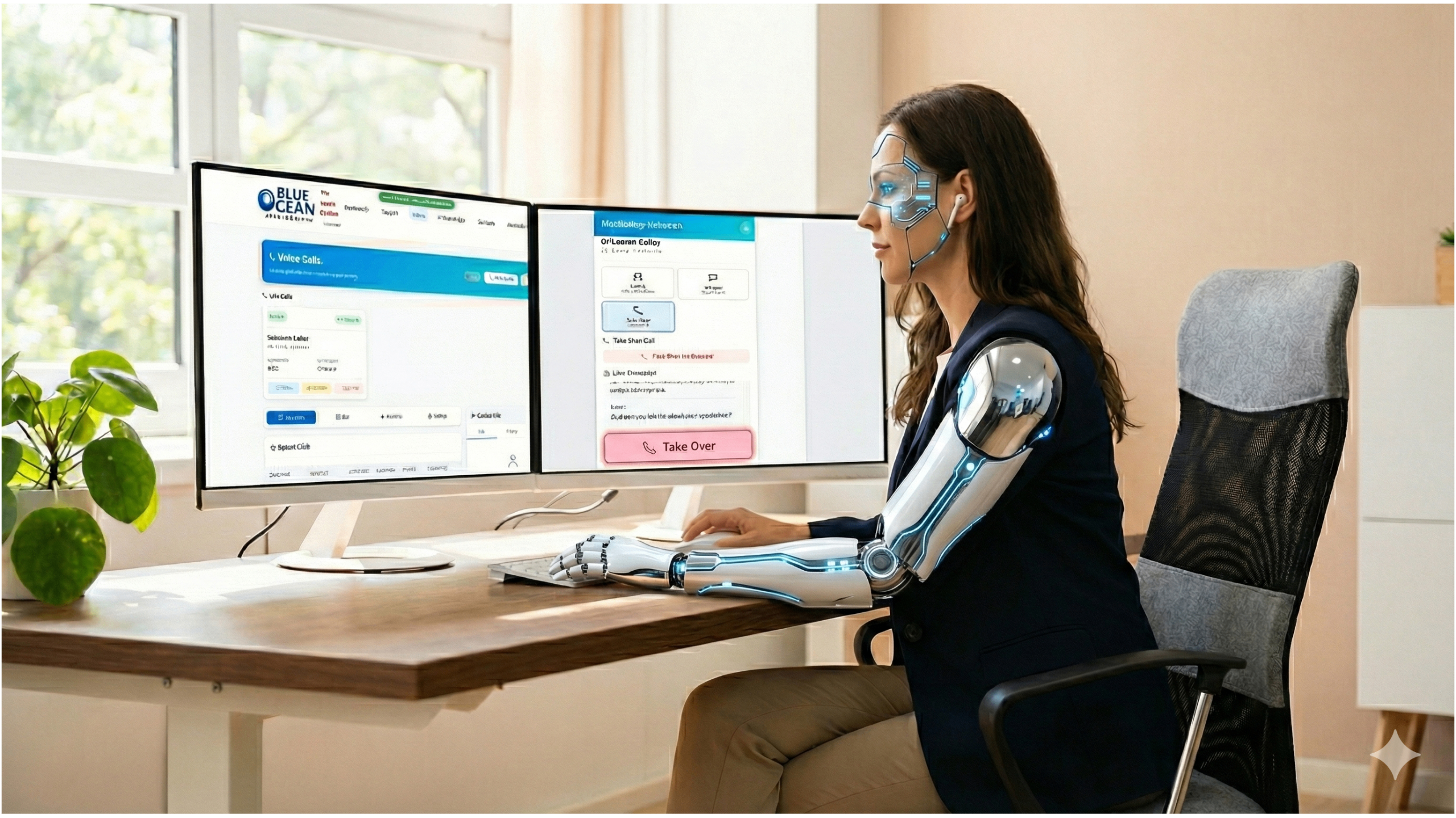
The evolution of automated receptionist technology has reached a pivotal moment where artificial intelligence and human expertise work together seamlessly. While AI handles routine inquiries with impressive efficiency, the ability for human agents to step in during critical moments transforms customer service from a purely automated experience into a truly collaborative one.
The breakthrough in automated receptionist technology isn't just about AI handling calls independently—it's about creating a fluid handoff between artificial and human intelligence. Modern platforms now offer real-time monitoring capabilities that allow human agents to listen in on conversations and take control at precisely the right moment. This represents a fundamental shift from traditional call center operations where transfers felt jarring and customers had to repeat information.
The seamless intervention capability addresses a critical gap in customer service automation. While AI excels at handling routine inquiries, scheduling appointments, and providing standard information, certain situations demand the nuanced understanding that only human agents can provide. Blue Ocean Applications has developed The Agora System's Automated Receptionist to bridge this gap, featuring Listen Mode to monitor calls live, Whisper Mode to coach mid-conversation, and TakeOver Mode to seamlessly transfer control—creating an intelligent system that knows when to maintain automated handling and when human intervention will deliver superior outcomes.
This technology eliminates the frustrating "press 1 to speak to an agent" experience that customers have grown to resent. Instead, the transition happens organically within the conversation flow, maintaining context and preserving the relationship-building opportunity that might otherwise be lost in a clunky transfer process.
Emotional intelligence remains uniquely human, especially when customers face frustrating technical issues, billing disputes, or urgent service needs. While AI can process information quickly and provide accurate responses, it cannot replicate the empathy required to de-escalate tense situations or provide the reassurance that comes from genuine human understanding. Research consistently shows that customers experiencing problems want to feel heard and understood, not just efficiently processed.
The ability for a human agent to seamlessly enter a conversation allows businesses to maintain their automated efficiency while ensuring that emotionally charged interactions receive appropriate attention. This dual approach prevents customer frustration from escalating and often transforms negative experiences into positive ones through skilled human intervention.
Strategic human takeover creates powerful opportunities for relationship building that automated systems simply cannot replicate. When a potential client calls with complex requirements or a high-value inquiry, having a skilled human agent step in demonstrates the business's commitment to personalized service. These moments often determine whether a prospect becomes a long-term customer or seeks alternatives.
The key lies in timing and context. AI systems can identify these high-value opportunities through conversation analysis, triggering human intervention at precisely the moment when personal attention will have maximum impact. This strategic approach ensures that automation enhances rather than replaces the human touch that drives business growth.
Human oversight through mid-call intervention serves as a real-time quality control mechanism that protects brand reputation and customer relationships. While AI systems achieve impressive accuracy rates, they can occasionally misinterpret complex requests or provide responses that, while technically correct, miss the customer's underlying need. Human agents can quickly identify these situations and course-correct before they impact customer satisfaction.
This quality control function extends beyond individual interactions. Human agents who regularly monitor and intervene in AI conversations gather valuable insights about system performance, common customer pain points, and opportunities for improvement. This feedback loop continuously improves both the AI system's capabilities and the overall customer experience.
Modern automated receptionist platforms use web-based SDK technology that enables seamless browser integration for human agents. This browser-based approach eliminates the need for complex phone system configurations or specialized hardware, allowing agents to monitor calls, receive notifications, and take control with a simple click. The real-time communication capabilities ensure that audio quality remains crystal clear throughout the transition process.
The technical architecture supporting this functionality includes advanced audio streaming protocols that maintain connection stability even during the handoff process. Agents can join calls silently to assess the situation before taking over, ensuring they understand the context and can provide immediate, relevant assistance without missing a beat.
The sophistication of modern AI systems extends far beyond simple call routing. When a human agent prepares to take over a conversation, the AI system provides a detailed briefing that includes the caller's stated needs, conversation history, and relevant background information gathered during the interaction. This context briefing transforms what could be an awkward "Can you please repeat that?" moment into a smooth continuation of the conversation.
Advanced natural language processing algorithms analyze not just what the customer has said, but how they've said it, identifying emotional cues, urgency levels, and potential frustration markers. This analysis helps human agents understand not only the technical aspects of the inquiry but also the customer's emotional state, enabling them to respond with appropriate empathy and urgency.
The warm transfer capability represents the pinnacle of AI-human collaboration in customer service. Rather than the traditional cold transfer where customers must re-explain their situation, warm transfers maintain conversational continuity while adding human expertise to the interaction. The AI system continues to monitor the conversation even after human takeover, ready to provide additional context or data as needed.
This integration extends to backend systems as well, with the AI automatically updating customer records, logging interaction details, and triggering appropriate follow-up actions. The result is a complete service experience that combines the efficiency of automation with the personalization of human interaction, all while maintaining detailed records for future reference.
The foundation of effective automated receptionist service lies in natural, conversational voice interactions that customers find comfortable and engaging. Modern AI systems use advanced speech synthesis and natural language processing to create conversations that feel genuinely human, avoiding the robotic responses that characterized earlier automated systems. This natural interaction style encourages customers to engage fully, providing more context that helps both the AI and human agents serve them better.
The 24/7 availability aspect addresses a critical business reality: customers call when it's convenient for them, not necessarily when businesses are open. By maintaining consistent, high-quality service around the clock, businesses can capture opportunities that would otherwise be lost to voicemail or competitors with better availability.
Intelligent lead capture goes far beyond collecting names and phone numbers. Modern systems engage in natural conversations that reveal customer needs, budget considerations, timeline requirements, and decision-making authority. This conversational approach to lead qualification provides sales teams with rich, actionable intelligence that enables more targeted and effective follow-up efforts.
The appointment booking functionality integrates seamlessly with existing calendar systems, allowing customers to schedule meetings or service calls during the initial conversation. This immediate gratification reduces the likelihood of prospects losing interest or choosing competitors while waiting for callbacks or email confirmations.
Sophisticated routing algorithms ensure that calls reach the most appropriate destination based on multiple factors including caller intent, account history, agent availability, and expertise matching. This intelligent distribution system maximizes the likelihood of first-call resolution while ensuring that complex issues receive appropriate attention from qualified personnel.
The escalation protocols built into modern systems recognize not just explicit requests for human assistance, but also subtle indicators of customer frustration, confusion, or high-value opportunity. This proactive approach to escalation prevents minor issues from becoming major problems and ensures that important opportunities receive proper attention.
Small and medium businesses experience the most dramatic impact from intelligent automated receptionist systems, as they typically lack the resources to maintain phone coverage during all business hours. The ability to handle the majority of customer inquiries automatically while maintaining the option for human intervention transforms their operational capacity without proportional increases in staffing costs.
The efficiency gains extend beyond simple call answering. Automated lead capture, appointment scheduling, and initial customer service responses free up valuable staff time for high-value activities like relationship building, complex problem-solving, and business development. This reallocation of human resources often results in measurable improvements in both customer satisfaction and business growth.
The economics of AI-human collaboration in customer service create compelling advantages for businesses of all sizes. By automating routine interactions while preserving human oversight and intervention capabilities, companies can significantly reduce labor costs without sacrificing service quality. Industry data suggests that businesses can achieve 10-15% improvements in conversion rates while reducing response times by up to 30%.
The cost savings compound over time as the AI system learns from both successful automated interactions and human interventions, continuously improving its ability to handle complex situations independently. This learning capability means that the percentage of calls requiring human takeover typically decreases over time, further improving the cost-effectiveness of the solution.
The evolution toward true AI-human collaboration represents more than just technological advancement—it reflects a fundamental shift in how businesses approach customer service strategy. Rather than viewing automation as a replacement for human agents, forward-thinking companies recognize that the most effective approach combines the efficiency of AI with the emotional intelligence and problem-solving capabilities that remain uniquely human.
This collaborative model creates opportunities for businesses to scale their customer service capabilities while maintaining the personal touch that drives customer loyalty and business growth. As the technology continues to evolve, the seamless integration between AI and human agents will become increasingly sophisticated, creating customer experiences that feel both highly efficient and genuinely personalized.
For businesses ready to adopt this future of customer service, Blue Ocean Applications provides The Agora System's Automated Receptionist with Listen, Whisper, and TakeOver capabilities—automation designed to improve operations while preserving the human connections that drive business success.


