Folding treadmills have a reputation for being less stable than traditional models, but modern engineering may have solved this problem… for good.
Key Takeaways:
Choosing between folding and non-folding treadmills often comes down to balancing space constraints with performance requirements. Many fitness enthusiasts assume that folding mechanisms compromise durability or functionality - but modern engineering has largely eliminated these concerns for quality models.
Modern folding treadmills deliver impressive performance that rivals traditional non-folding models for the majority of home users. Quality folding treadmills feature robust construction with durable materials, multiple speed settings ranging from gentle walking paces to challenging running speeds, and incline capabilities that can simulate hill training effectively.
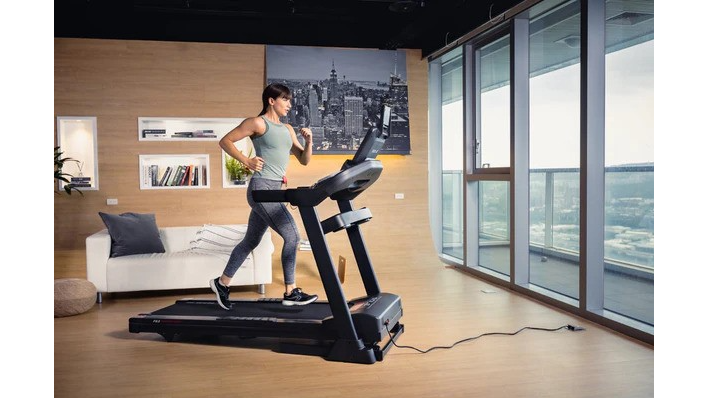
The key lies in selecting a well-engineered model with proper motor specifications and sturdy folding mechanisms. The SOLE F63 treadmill exemplifies this balance, featuring a powerful 3.0 HP motor and 15 levels of incline adjustment while maintaining the convenience of a space-saving folding design.
These kinds of high-quality folding treadmills incorporate preset workout programs, heart rate monitoring, and technology features that match or even exceed many non-folding alternatives.
The primary advantage of folding treadmills? Their ability to turn unused space into functional workout areas when needed, then disappear when not in use. This flexibility is invaluable for modern home environments where every square meter matters.
Folding treadmills excel at maximizing limited living space by folding vertically against walls, fitting into wardrobes, or sliding under beds depending on the model's dimensions. The SOLE F63 demonstrates this versatility by reducing its footprint from 82 inches in length when assembled to just 50 inches when folded, whilst maintaining a manageable 72-inch height. This dramatic size reduction allows users to reclaim valuable floor space for other activities, so it's particularly beneficial for those living in apartments, shared accommodations, or smaller homes where dedicating an entire room to fitness equipment just isn't practical.
Transport wheels offer another significant advantage when it comes to folding treadmills, enabling users to relocate their equipment easily between different rooms or areas of their home. This mobility allows for varied workout environments - whether exercising in front of a television, positioning near windows for natural light during morning workouts, or moving to quieter areas during evening sessions. The combination of folding capability and transport wheels provides unmatched flexibility in home fitness arrangements, accommodating changing preferences and seasonal adjustments to workout routines.
Non-folding treadmills provide superior permanent stability through their fixed frame construction and lower center of gravity. These models typically feature more robust base structures that resist movement during intense workouts, making them preferable for dedicated home gyms or users who prioritize absolute stability over space efficiency. The permanent setup also eliminates that constant need for repeated folding and unfolding - a particular benefit for busier users.
Understanding the performance characteristics of each treadmill type helps inform the best choice for individual fitness goals and usage patterns. Both folding and non-folding models offer distinct advantages depending on specific requirements.
Quality folding treadmills now match non-folding models in performance metrics. The SOLE F63, for example, offers speeds from 0.5 to 12 MPH with 15 incline levels, providing training options for walking, jogging, and running workouts. Modern folding treadmills even include 6 standard pre-programmed workouts plus 2 user-defined options and 2 heart rate programs, matching the variety found in traditional models. Advanced features such as heart rate monitoring, pace tracking, and distance calculations remain standard across both categories, ensuring that users can access complete fitness data regardless of their treadmill choice.
Motor specifications play a role in determining treadmill performance and longevity. The 3.0 HP motor in quality folding treadmills like the SOLE F63 provides sufficient power for most home users, supporting consistent performance during walking, jogging, and moderate running sessions. However, users planning intensive daily running or those exceeding 250 pounds might benefit from the typically larger motors found in premium non-folding models, which often feature 4.0 HP or greater capacity for sustained high-intensity use.
Contemporary folding treadmills integrate impressive technology features that improve home workout experiences. The SOLE F63, for one, includes a 6.5-inch backlit LCD display (non-touchscreen), Bluetooth speakers for wireless audio streaming, USB charging ports for device power, and integrated tablet holders for entertainment or guided workout videos. These features ensure that space-saving doesn't mean sacrificing connectivity or entertainment options during exercise sessions.
Modern folding treadmills have made significant strides in stability and durability, though certain limitations remain that users should consider when making their selection.
Folding treadmills may experience reduced stability compared to non-folding models during high-intensity workouts, particularly at speeds exceeding 8-10 MPH or when used by heavier individuals. The folding mechanism, whilst secure during normal operation, introduces additional connection points that can contribute to slight movement or vibration under extreme conditions. Users weighing over 250 pounds or those planning regular sprint training should carefully evaluate stability characteristics and consider models with particularly robust locking mechanisms or look at non-folding alternatives for maximum stability assurance.
Weight capacity specifications provide safety parameters that users have to respect, regardless of treadmill type. For instance, the SOLE F63 supports users up to 325 pounds, which accommodates the majority of home fitness enthusiasts safely. However, approaching maximum weight limits can reduce stability margins and potentially accelerate wear on folding mechanisms. Users within 50 pounds of stated capacity limits should look for models with generous safety margins or consider non-folding alternatives that typically offer higher weight capacities due to their reinforced permanent frame construction.
For the majority of home fitness enthusiasts, folding treadmills represent the optimal balance of functionality, convenience, and space efficiency.
The decision ultimately depends on individual priorities: those with dedicated workout spaces and intensive training regimens may prefer the absolute stability of non-folding models, whilst users seeking flexible, space-efficient solutions will find that quality folding treadmills meet their performance needs. Modern folding treadmills have evolved to provide genuine alternatives to traditional models, making home fitness accessible to more people regardless of their spatial constraints.
The combination of advanced engineering, features, and space-saving design makes folding treadmills an increasingly compelling choice for home fitness enthusiasts who refuse to compromise between performance and practicality.
Brands like SOLE Fitness continue to innovate in home fitness equipment, delivering quality treadmills that maximize performance and space efficiency for modern homes.


