Music educators are discovering that percussion instruments can boost children’s reading skills and math abilities in surprising ways.
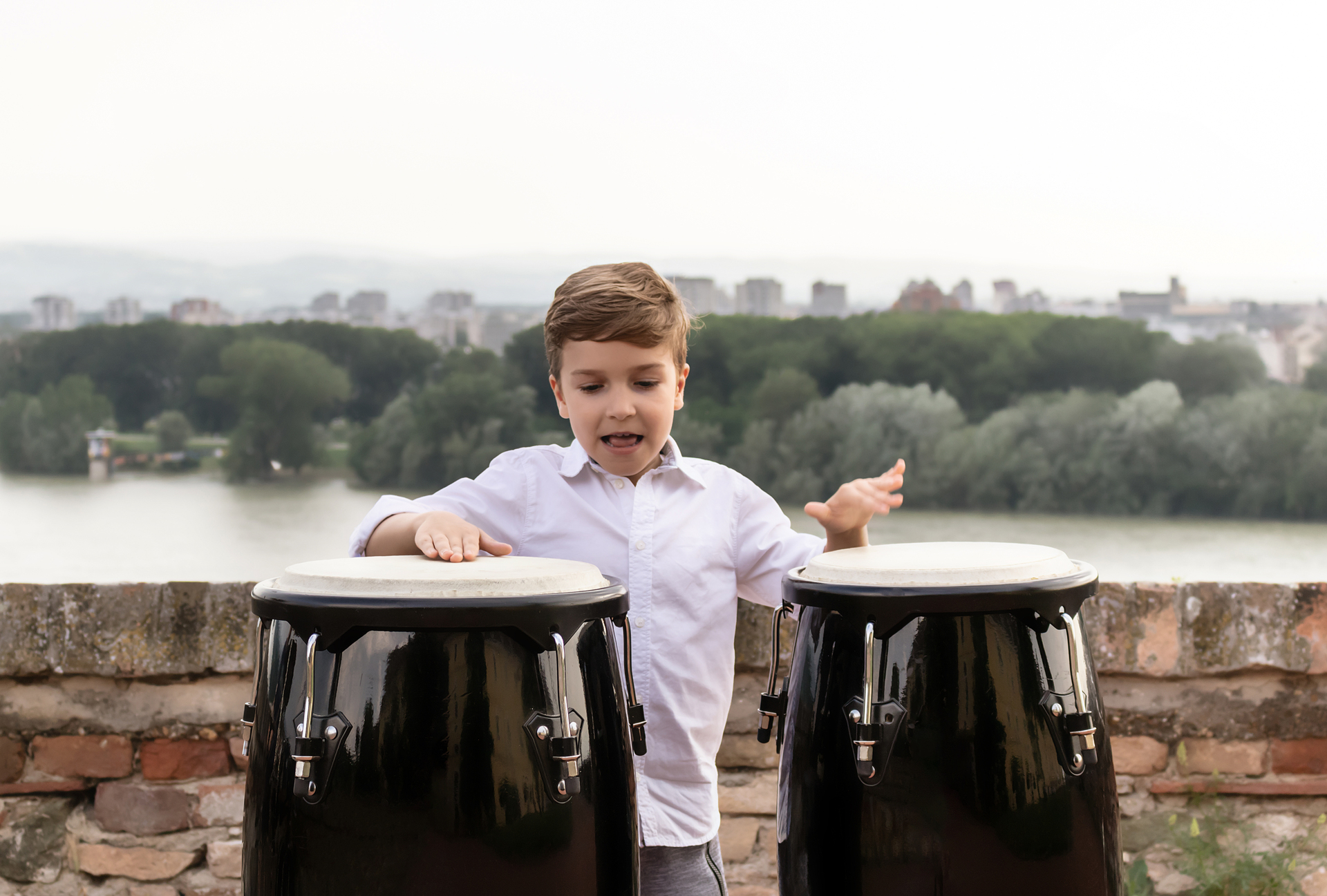
Music educators understand that percussion instruments serve as the gateway to musical understanding for children. These accessible, engaging instruments transform abstract concepts like rhythm and beat into tangible, interactive experiences that captivate young minds while building skills that extend far beyond the music classroom.
Musical instrument retailer Sam Ash explains that percussion instruments create an immediate connection between children and music that other instrument families cannot match. Unlike wind or string instruments that require complex finger positioning or breath control, percussion allows students to produce satisfying sounds from their very first attempt. This instant gratification keeps children engaged while they develop fundamental musical concepts.
The physical nature of percussion playing activates multiple areas of the brain simultaneously. When students strike a drum or shake a maraca, they coordinate hand movements, process auditory feedback, and internalize rhythmic patterns. This multi-sensory approach strengthens neural pathways that support learning across all academic subjects.
Research consistently demonstrates that percussion instruments can strengthen literacy, motor skills, math abilities, focus, and social-emotional development in young learners. These benefits compound over time, creating a foundation for lifelong musical appreciation and academic success. Educators can find various percussion collections designed for classroom use to support these developmental advantages.
Tambourines represent the perfect entry point for young musicians. Their lightweight construction and intuitive playing style allow even preschoolers to create rhythmic patterns successfully. Students can shake, tap, or strike tambourines against their palms, finding different timbres and dynamics while building confidence in their musical abilities.
Egg shakers and maracas complement tambourines beautifully in classroom settings. These instruments require minimal coordination yet offer rich opportunities for rhythmic learning. Teachers can use color-coded shakers to create visual learning aids, helping students associate specific colors with different beat patterns or song sections.
Hand drums such as bongos, congas, and djembes prove invaluable for developing bilateral coordination in young learners. These instruments, sized appropriately for small hands, teach students to use both hands independently while maintaining steady tempos. The tactile feedback from drumheads helps children understand the relationship between touch pressure and volume dynamics.
Djembes deserve special recognition for their versatility in educational settings. Their goblet shape produces distinct bass and tone sounds depending on where students strike the drumhead. This variety allows teachers to create call-and-response activities that develop listening skills while reinforcing rhythmic concepts.
Rhythm sticks and claves provide the foundation for understanding steady beat and subdivision patterns. These simple wooden instruments help students internalize the pulse that underlies all music. Teachers can use rhythm sticks for counting exercises, turning mathematical concepts into musical experiences that reinforce both subjects simultaneously.
The durability of rhythm sticks makes them ideal for daily classroom use. Students can tap them together, strike them against surfaces, or use them to conduct their peers. This versatility ensures that every child can participate meaningfully, regardless of their current skill level or physical abilities.
Temple blocks, often crafted from laminated wood, offer distinct tones that help children develop pitch recognition skills. Basic Beat is one brand that offers such blocks with sturdy, height-adjustable stands and rubber mallets, ensuring durability and ease of use in elementary school settings. The different pitches allow teachers to create simple melodies while maintaining the accessible nature of percussion playing.
Temple blocks bridge the gap between rhythm-only instruments and full melodic instruments. Students can learn to play simple songs using just a few pitches, building confidence before progressing to more complex mallet instruments. The clear, penetrating sound of temple blocks makes them ideal for ensemble playing in larger classroom settings.
Child-appropriate xylophones introduce melodic concepts without overwhelming young learners. These scaled-down instruments feature wider bars and shorter ranges than professional models, making them easier for small hands to navigate accurately. The bright, cheerful tones of xylophones naturally appeal to children while teaching important musical concepts like high and low pitches.
Some children's xylophones include color-coded bars that correspond to musical notation, which can help connect visual symbols with sounds. This visual aid helps students connect abstract musical symbols with concrete sounds, accelerating the learning process. Teachers can remove certain bars to create pentatonic scales, ensuring that even random playing sounds musical and encouraging creative learning.
Kids' percussion packages typically include shakers, tambourines, maracas, and claves designed to be accessible and engaging, with colorful instruments sized appropriately for small hands. These sets ensure that every student can participate simultaneously in rhythm activities, maximizing engagement and learning opportunities during music class.
Well-designed classroom packages consider the diverse needs of elementary learners. They include instruments with varying difficulty levels, allowing teachers to differentiate instruction based on student abilities. The inclusion of multiple instruments of the same type ensures that popular choices remain available to all students, preventing conflicts and maintaining positive learning environments.
Schools operating under tight budgets can build effective percussion collections gradually by focusing on versatile, durable instruments that serve multiple educational purposes. Rhythm sticks, for example, cost very little but provide countless learning opportunities across various musical concepts and activities.
Individual instrument purchases allow music programs to replace worn items without replacing entire sets. This approach proves more economical over time while ensuring that students always have access to quality instruments that produce the intended sounds and educational benefits.
Proper storage systems extend instrument life significantly while teaching students responsibility and organization skills. Rolling carts with designated spaces for each instrument type help maintain order while making setup and cleanup efficient. Clear labeling systems allow students to manage instrument distribution and collection independently.
Regular maintenance schedules prevent minor issues from becoming costly repairs. Simple tasks like checking for loose parts, cleaning surfaces, and storing instruments in appropriate conditions preserve sound quality and appearance. Students can participate in basic maintenance activities, learning to care for shared resources while developing life skills.
Drumming can help early elementary students with basic counting and cyclical patterns, while also introducing middle school students to fractions and more complex mathematical concepts related to rhythm. When students clap whole notes, half notes, and quarter notes, they physically experience mathematical relationships that abstract worksheets cannot convey.
Rhythm subdivisions provide concrete examples of fractions in action. Students naturally understand that four quarter notes equal one whole note because they can feel and hear these relationships through percussion playing. This embodied learning creates a deeper mathematical understanding that transfers to traditional math instruction.
Playing percussion instruments can aid children in understanding beat patterns, which supports phonological awareness and improves auditory skills necessary for decoding words and reading readiness. The steady pulse of drumming mirrors the natural rhythm of spoken language, helping students recognize syllable patterns and word boundaries.
Rhythm activities strengthen the neural pathways responsible for processing sequential sounds, a fundamental skill for reading success. Students who struggle with traditional phonics instruction often find success through percussion-based approaches that engage their kinesthetic learning preferences while building the same underlying skills.
Engaging with percussion instruments supports gross and fine motor development, potentially strengthening eye-hand coordination, posture, and precision. These physical improvements translate directly into better handwriting, improved coordination in sports activities, and better overall body awareness.
Playing percussion instruments requires physical coordination that refines fine motor skills and improves dexterity. The bilateral coordination needed for drumming strengthens the connections between brain hemispheres, supporting cognitive development across all academic areas. Students develop better control over their movements while building the muscle memory necessary for complex physical tasks.
Percussion instruments provide the ideal starting point for children's musical journeys because they remove barriers that other instrument families present. Every child can succeed with percussion, regardless of their current musical knowledge or physical development. This universal accessibility makes percussion the foundation upon which lifelong musical appreciation grows.
Engaging with percussion instruments can strengthen memory, attention, and problem-solving skills by activating various brain areas simultaneously. These cognitive benefits compound over time, creating stronger learners who approach challenges with confidence and creativity. The social aspects of group percussion activities also build collaboration skills that prove valuable in all future endeavors.


