Healthcare facilities face a tough choice between AI interpreters that cut costs by 70% and human interpreters with near-perfect accuracy. But recent WHO findings reveal something shocking about AI performance that could change everything for patient safety.
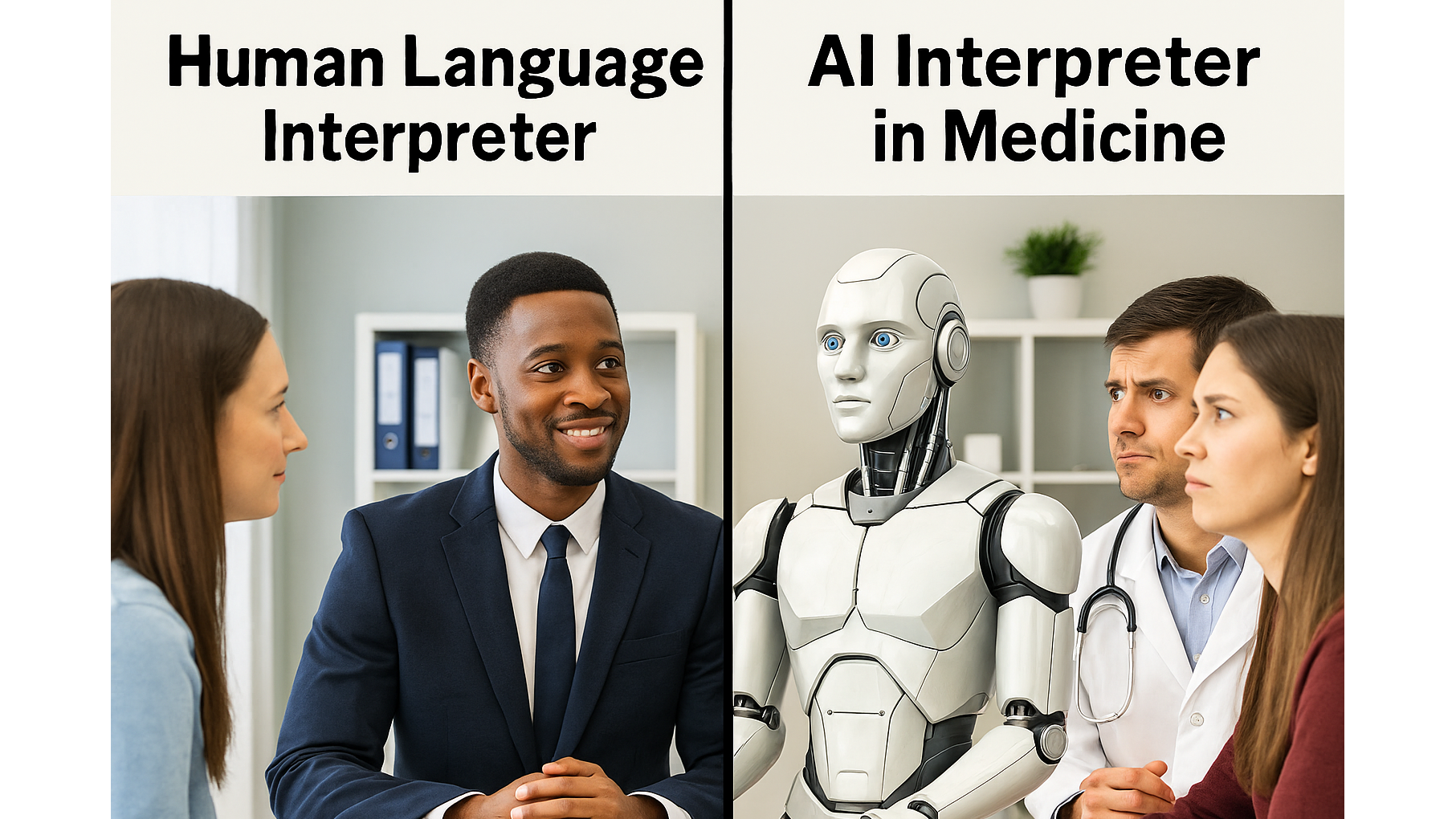
Healthcare administrators face a critical decision when choosing between AI and human medical interpreters. While cost pressures drive interest in automated solutions, patient safety and regulatory compliance demand careful evaluation of each approach's strengths and limitations.
A 2019 study revealed that Google Translate achieved an 82.5% accuracy rate for seven common languages in medical settings. This statistic initially appears promising, but the 17.5% failure rate represents a significant risk when patient lives hang in the balance.
Human medical interpreters consistently deliver near-perfect accuracy rates, particularly when certified and specialized in medical terminology. The difference becomes stark when examining high-stakes scenarios where precision matters most. Gateway Languages, a network of state-certified medical interpreters who undergo rigorous training to ensure accuracy in complex medical communications, says that AI accuracy dips significantly when presented with multi-lingual or cultural differences.
The accuracy gap widens even further for certain language pairs. A 2024 study showed AI translation systems demonstrate accuracy scores ranging from 83-97.8% when translating from English, but plummet to 36-76% when translating to English. This directional bias creates dangerous communication gaps for non-English speaking patients attempting to convey symptoms or concerns to healthcare providers.
AI medical interpreters offer compelling financial benefits, reducing operational costs by up to 70% compared to human interpreters. The technology provides 24/7 availability without overtime pay, vacation coverage, or benefits packages. Large healthcare systems processing thousands of interpretation requests monthly find these savings particularly attractive.
Implementation costs remain minimal once AI platforms integrate with existing electronic health record systems. The scalability advantage becomes apparent during peak demand periods when human interpreters may be unavailable or require scheduling delays.
However, translation errors carry severe financial consequences. Medical malpractice claims stemming from communication failures can reach millions of dollars per incident. A single misinterpreted medication dosage or surgical instruction can eliminate years of cost savings from AI implementation.
The World Health Organization's Simultaneous Interpretation Service revealed that artificial intelligence systems used for live interpretation deliver overwhelmingly poor results. According to the findings, 98.89% of the evaluated AI simultaneous interpretation fell below the minimum required quality threshold of 75%, with an average score of just 46%. Out of 90 AI-generated interpretations, 89 scored as low as 5% in some cases. This is damning for patient care advocacy and could lead to significant financial liability.
Healthcare administrators must calculate true return on investment beyond immediate operational savings. Legal defense costs, settlement payments, and regulatory fines often exceed the annual savings from AI implementation. Insurance premiums may increase following AI-related incidents, further eroding cost benefits.
The hidden costs of AI failures include staff time spent correcting errors, patient readmissions due to miscommunication, and damaged facility reputation. These indirect expenses frequently surpass the initial cost reduction promised by AI systems.
AI medical interpretation exists in a regulatory gray area with rapidly evolving compliance requirements. While many AI platforms are designed to be HIPAA compliant, some lack specific HIPAA certification, relying instead on general data protection measures. Healthcare facilities using uncertified AI systems risk significant penalties during audits.
The fast-paced development of AI technology outpaces regulatory frameworks, leaving healthcare administrators uncertain about compliance requirements. New AI models frequently lack the extensive testing and certification processes required for medical applications.
HIPAA-compliant AI systems must implement end-to-end encryption, secure data transmission protocols, and audit trails. Patient health information processed through AI platforms requires the same protection standards as traditional medical records.
Cloud-based AI systems present additional challenges, as data may be processed across multiple servers and jurisdictions. Healthcare facilities must verify that AI vendors maintain business associate agreements and comply with all HIPAA security requirements.
Human medical interpreters operate under well-established certification and consent protocols. State licensing requirements ensure interpreters meet specific qualifications and maintain professional standards. Patient consent procedures for human interpreters are clearly defined and legally tested.
Certified human interpreters must complete ongoing education requirements and maintain professional liability insurance. This regulatory framework provides healthcare facilities with clear compliance pathways and reduced legal risk.
Real-world AI failures demonstrate the technology's limitations in critical scenarios. A study examining Google Translate's accuracy found that 19% of discharge instructions were incorrectly translated into Chinese, potentially leaving patients without proper post-treatment guidance. These errors included wrong medication schedules and incorrect follow-up appointment instructions.
Emergency department scenarios show even higher failure rates, where time pressure and complex medical terminology create perfect conditions for AI mistakes. Patients discharged with incorrect instructions face increased readmission risks and potential health complications.
AI systems struggle with specialized medical vocabulary across the numerous language pairs commonly needed in healthcare settings. Rare languages and dialects present particular challenges, with AI platforms often defaulting to literal translations that completely miss medical context.
Pharmaceutical names, surgical procedures, and diagnostic terminology frequently lack accurate AI translations. These gaps become critical when patients require precise understanding of complex treatment plans or medication regimens.
Cultural nuances in medical communication extend beyond direct translation. AI systems cannot interpret cultural context, religious considerations, or family dynamics that influence patient care decisions. These misinterpretations often result in treatment delays and reduced patient compliance.
Pain descriptions, symptom reporting, and treatment preferences vary significantly across cultures. AI translation misses these subtle but crucial communication elements, potentially leading to misdiagnoses or inappropriate treatment plans.
Human interpreters excel in emergency situations requiring immediate adaptation and contextual understanding. During surgical procedures or trauma care, interpreters can adjust their communication style to match the urgency and complexity of the situation.
Emergency scenarios often involve rapid-fire communication between multiple healthcare providers. Human interpreters can prioritize critical information and ensure nothing gets lost in translation during life-threatening situations.
Studies show that cultural mediation by human interpreters improves patient compliance. This improvement stems from interpreters' ability to explain medical concepts within cultural frameworks that patients understand and accept.
Human interpreters serve as cultural bridges, helping healthcare providers understand patient perspectives while ensuring patients understand treatment importance. This mediation role significantly impacts treatment outcomes and patient satisfaction scores.
Smart healthcare facilities deploy AI interpretation for low-risk administrative functions like appointment scheduling, general information requests, and basic patient registration. These routine interactions benefit from AI's speed and availability while minimizing safety risks.
Administrative AI use cases include insurance verification calls, medication refill requests, and appointment confirmations. These applications take advantage of AI's cost benefits without exposing patients to critical communication errors.
High-stakes medical scenarios require certified human interpreters exclusively. Surgical consultations, emergency department visits, and intensive care communications demand the accuracy and adaptability only humans provide.
Mental health sessions, pediatric care, and end-of-life discussions particularly benefit from human interpreters who can handle emotional complexity and cultural sensitivity requirements.
Successful AI implementations include mandatory human review protocols. Qualified interpreters must verify all AI translations before patient communication, particularly for medication instructions and treatment plans.
Review protocols should include spot-checking AI translations, maintaining correction logs, and continuously updating AI systems based on identified errors. This quality assurance process helps minimize risk while capturing cost benefits.
Technology failures occur at the worst possible moments. Healthcare facilities must maintain 24/7 human interpreter backup systems for AI platform outages or critical error situations.
Backup protocols should include rapid escalation procedures, emergency interpreter contact lists, and clear decision trees for when to abandon AI systems in favor of human interpreters.
The optimal approach combines strategic AI deployment with reliable human interpreter access. Healthcare administrators need partners who understand both cost pressures and patient safety requirements, delivering certified interpreters when stakes are highest while enabling appropriate AI use for routine tasks.
Professional interpretation services provide the reliability and compliance assurance that AI systems currently cannot match. The investment in human interpreters pays dividends through reduced liability exposure, improved patient outcomes, and maintained regulatory compliance. In the AI versus human debate, for now at least, humans understand patients better.


