Most home producers think any speakers will work for mixing, but there’s a scientific reason why studio monitors reveal mix problems that Hi-Fi speakers actually hide—and it’s not what you’d expect.
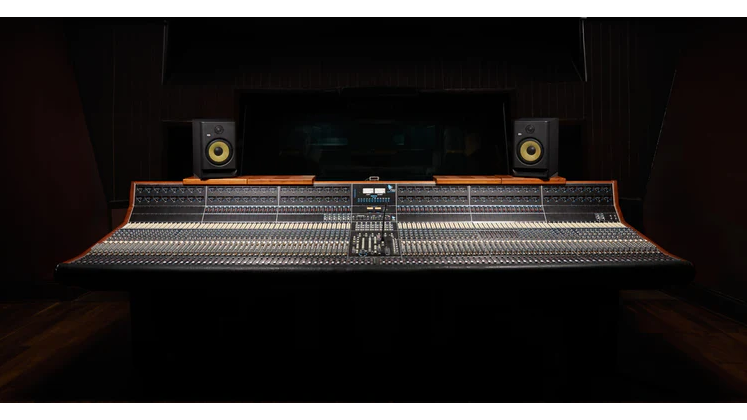
Professional audio production demands accuracy above all else. While consumer speakers prioritize entertainment value through enhanced bass and sparkly highs, studio monitors serve a fundamentally different purpose: revealing the unvarnished truth about your mix. Understanding why these specialized speakers are essential – rather than optional – separates amateur recordings from professional-quality productions.
Studio monitors function as the audio engineer's magnifying glass, exposing every detail within a mix that would otherwise remain hidden. Unlike consumer speakers designed to make music sound appealing, monitors prioritize clinical accuracy over listener enjoyment. This fundamental difference shapes every aspect of their design, from driver materials to crossover networks.
The primary distinction lies in their neutral sonic signature. Where Hi-Fi speakers might emphasize bass frequencies to create excitement or boost treble for perceived clarity, studio monitors maintain strict neutrality across the frequency spectrum. This neutrality enables engineers to make informed decisions about EQ adjustments, compression settings, and spatial placement without second-guessing whether what they're hearing represents the actual recording or speaker coloration.
Professional engineers rely on this accuracy to create mixes that translate well across different playback systems. highlights how even affordable options can provide the transparency needed for critical listening tasks. When your reference point remains consistent and truthful, the resulting mixes will sound balanced whether played through car speakers, earbuds, or high-end home systems.
A flat frequency response aims for equal volume reproduction across the audible spectrum (20Hz-20kHz), but in reality, monitors have slight variations within a tolerance range, creating an unbiased sonic window into your mix. This characteristic immediately exposes frequency buildup, masking issues, and tonal imbalances that colored speakers would disguise. When low-mid frequencies accumulate around 200-400Hz, flat monitors reveal this muddiness clearly, whereas bass-heavy consumer speakers might mask the problem entirely.
Frequency masking becomes particularly apparent through flat monitors. If a bass guitar and kick drum compete in the same frequency range, accurate monitors expose this conflict instantly. The engineer can then make precise EQ cuts to create separation, ensuring each element occupies its own sonic space. Consumer speakers with boosted low-end would blur these distinctions, making surgical EQ decisions nearly impossible.
Hi-Fi speakers intentionally color sound to enhance the listening experience, typically boosting bass frequencies below 100Hz and treble frequencies above 8kHz while creating a subtle midrange dip. This "smile curve" EQ makes music sound more exciting, but catastrophically misleads mixing decisions. An engineer using such speakers might over-compensate by adding excessive midrange content, resulting in harsh, fatiguing mixes.
These speakers also compress dynamic range subtly, making quiet details seem more present while taming aggressive transients. During mixing, this artificial dynamic compression prevents engineers from properly setting compressor attack times, release curves, and ratio settings. The result is mixes that sound lifeless on systems lacking proper dynamic range capabilities.
Consumer speakers boost frequencies to create immediate appeal – enhanced bass provides physical impact, while elevated treble adds perceived detail and airiness. However, these enhancements create a false sonic reality that leads to poor mixing decisions. Engineers working on boosted systems typically under-mix bass content and over-brighten their high frequencies, creating thin, harsh-sounding productions.
Professional monitors eliminate these deceptions by maintaining ruler-flat response curves, typically varying no more than ±2dB across their operational bandwidth. This precision allows engineers to hear precisely how much low-end energy their mix contains and whether high-frequency content adds clarity or introduces harshness.
Studio monitors, when properly positioned, allow sound from both speakers to reach both ears, creating a natural stereo perception that differs significantly from the isolated channels experienced with headphones. This interaural effect proves crucial for accurate panning decisions and stereo width assessment.
When panning instruments across the stereo field, monitors reveal how elements interact spatially. A guitar panned 30% left will still reach the right ear slightly delayed and attenuated, creating subtle comb filtering that affects tonal character. Engineers can hear these interactions clearly through monitors, enabling precise panning adjustments that maintain tonal integrity while achieving desired spatial placement.
Phase problems between stereo channels become immediately apparent through monitor positioning. When identical signals arrive at slightly different times – often from microphone placement issues during recording – the interaural effect creates audible cancellations and reinforcements. These phase relationships sound completely different through headphones, where each ear receives only one channel.
Mono compatibility checking becomes natural with monitors since the positioning inherently provides mono information. Engineers can instantly hear how their stereo mix translates to mono playback systems by listening to the phantom center image created by monitor positioning. Phase-reversed elements will cancel noticeably, while properly aligned signals will maintain their presence and clarity.
Studio monitors excel at reproducing a wide dynamic range without compression artifacts or distortion. This capability remains essential for proper gain staging and dynamic processing decisions. When setting compressor thresholds, engineers need to hear exactly when compression engages and how it affects both attack transients and decay characteristics. Monitors with limited dynamic range would mask these subtle but crucial details.
Low-level detail resolution separates professional monitors from consumer speakers. Quality monitors reveal reverb tails, subtle room ambience, and quiet instrumental details that might disappear on less capable systems. This resolution enables engineers to make informed decisions about reverb send levels, ambient microphone balance, and overall mix density without relying on visual metering alone.
Professional monitors maintain clean reproduction even at high sound pressure levels, preventing dynamic distortion that would color mixing decisions. During loud passages with multiple instruments competing for headroom, quality monitors reveal exactly when digital or analog clipping begins to occur. This early warning system allows engineers to adjust levels before audible distortion corrupts their mix.
Thermal compression – where speaker drivers reduce output as voice coils heat up – remains minimal in well-designed studio monitors. Consumer speakers often exhibit significant thermal compression during extended listening sessions, gradually reducing high-frequency output and dynamic impact. This phenomenon would gradually shift an engineer's perception during long mixing sessions, leading to progressively brighter, more compressed mix decisions.
Optimal monitor placement involves forming an equilateral triangle between the speakers and the listening position. Distances are adjusted based on room acoustics and monitor specifications, with typical distances ranging from 4 to 8 feet depending on room size and monitor specifications. This geometry ensures both speakers arrive at the listening position with equal time and amplitude, creating a stable stereo image with accurate phantom center positioning.
For 5-inch monitors in home studios, a 6-foot triangle often provides the ideal balance between direct sound and room interaction. Larger monitors may require 8-10 foot positioning to allow proper driver integration, while smaller nearfield monitors can work effectively at 4-5 feet. The key lies in maintaining equal distances while angling both monitors toward the listening position to optimize high-frequency response.
Wall proximity influences monitor frequency response. Experiment with distances, keeping in mind that placement too close to walls, especially corners, can cause bass buildup. Some guidelines suggest placing monitors either very close (within a few inches) or at least 43 inches (110cm) away from the front wall.
Side wall reflections create comb filtering that alters frequency response and stereo imaging. Maintaining at least 3 feet from side walls, or treating first reflection points with absorption panels, preserves accurate frequency response and prevents phantom image shifting. Asymmetrical placement relative to side walls can actually benefit stereo imaging by reducing correlation between left and right channel reflections.
Tweeter alignment with the ear level is crucial for accurate high-frequency response. Deviations from ear level can alter the tonal balance, with high frequencies being susceptible to vertical positioning. Most monitor tweeters exhibit directional dispersion patterns that narrow significantly above 10kHz, making vertical positioning critical for consistent tonal balance.
Angling monitors slightly downward when placed above ear level helps maintain proper high-frequency balance, though direct ear-level positioning remains preferable. Monitor stands or desktop isolation pads enable precise height adjustment while reducing vibration transmission that can muddy low-frequency reproduction and create mechanical noise.
The fundamental purpose of studio monitors extends beyond simple sound reproduction – they provide an unfiltered window into your mix that reveals both strengths and weaknesses without artificial enhancement or masking. This brutal honesty initially sounds less appealing than consumer speakers, but it enables the critical listening skills necessary for professional audio production.
Many audio engineers value quality monitors for their ability to reveal details within recordings, including processing choices, performance nuances, and technical imperfections. This transparency aids in making informed mixing decisions. This transparency might initially feel harsh compared to forgiving Hi-Fi speakers, but it develops critical listening skills that translate into better mix decisions and more professional-sounding results.
Using accurate studio monitors as a primary reference point can significantly improve mix translation, helping engineers create mixes that sound balanced across various playback systems. However, mix translation is also influenced by room acoustics, listening environment, and personal preferences. The neutral reference point ensures balanced frequency distribution and appropriate dynamic processing that serves the music rather than compensating for speaker coloration.
The investment in quality studio monitors pays dividends throughout an engineer's career, providing the consistent reference point necessary for developing golden ears and making confident mix decisions.


